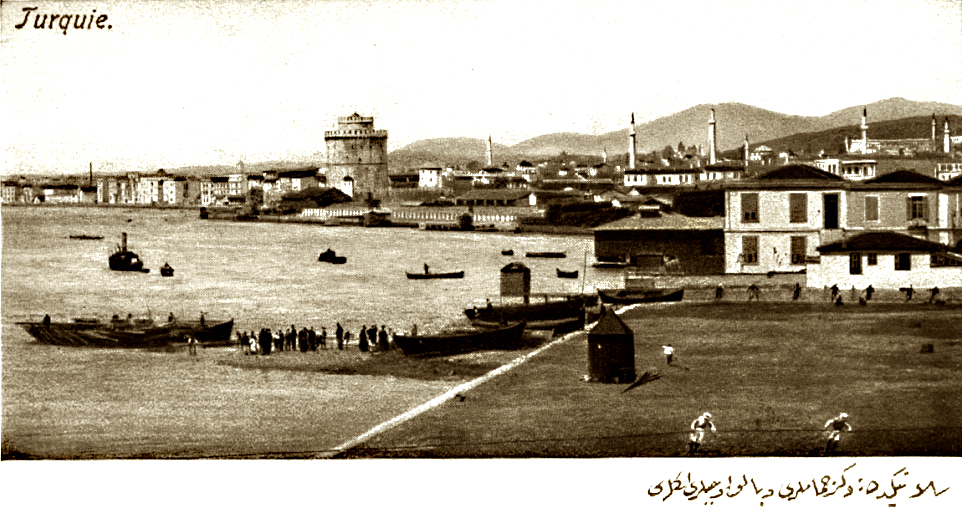
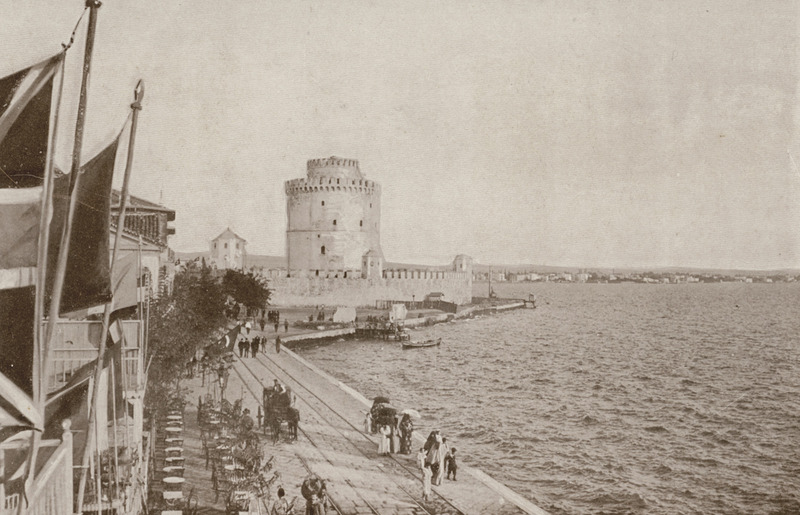
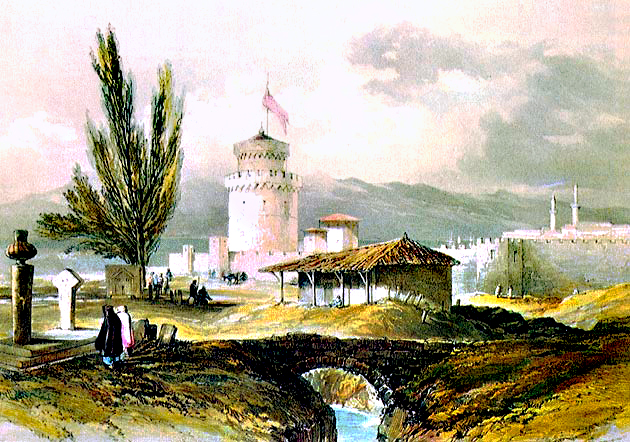
In 1881, Thessaloniki was one of the liveliest port cities of the Ottoman state. Steamers unloaded cargo at the quay, and the railway reaching into the Balkans linked the city to Europe. In the streets, Turkish, Ladino, Greek, Bulgarian and French could be heard all at once.
The child who grew up in this city saw all the colours and all the cracks of the empire at a very early age. The first eighteen years of a fifty-seven-year life are on this page.
A port city
The symbol of the city was the White Tower on the seafront. Around it were coffee houses, piers, carts. Behind the city stretched the Turkish quarters, climbing the slopes.
Thessaloniki was a city of trade, of newspapers and of new ideas. Nowhere else in the empire were so many schools, so many printing presses found side by side. Schools teaching by the new method opened here; books from Europe were read here.
But the same city also stood right in the middle of the unravelling of the Balkans. Armed bands roamed the surrounding mountains, and every nation’s dream of founding its own state hung in the city’s air.
A three-storey house
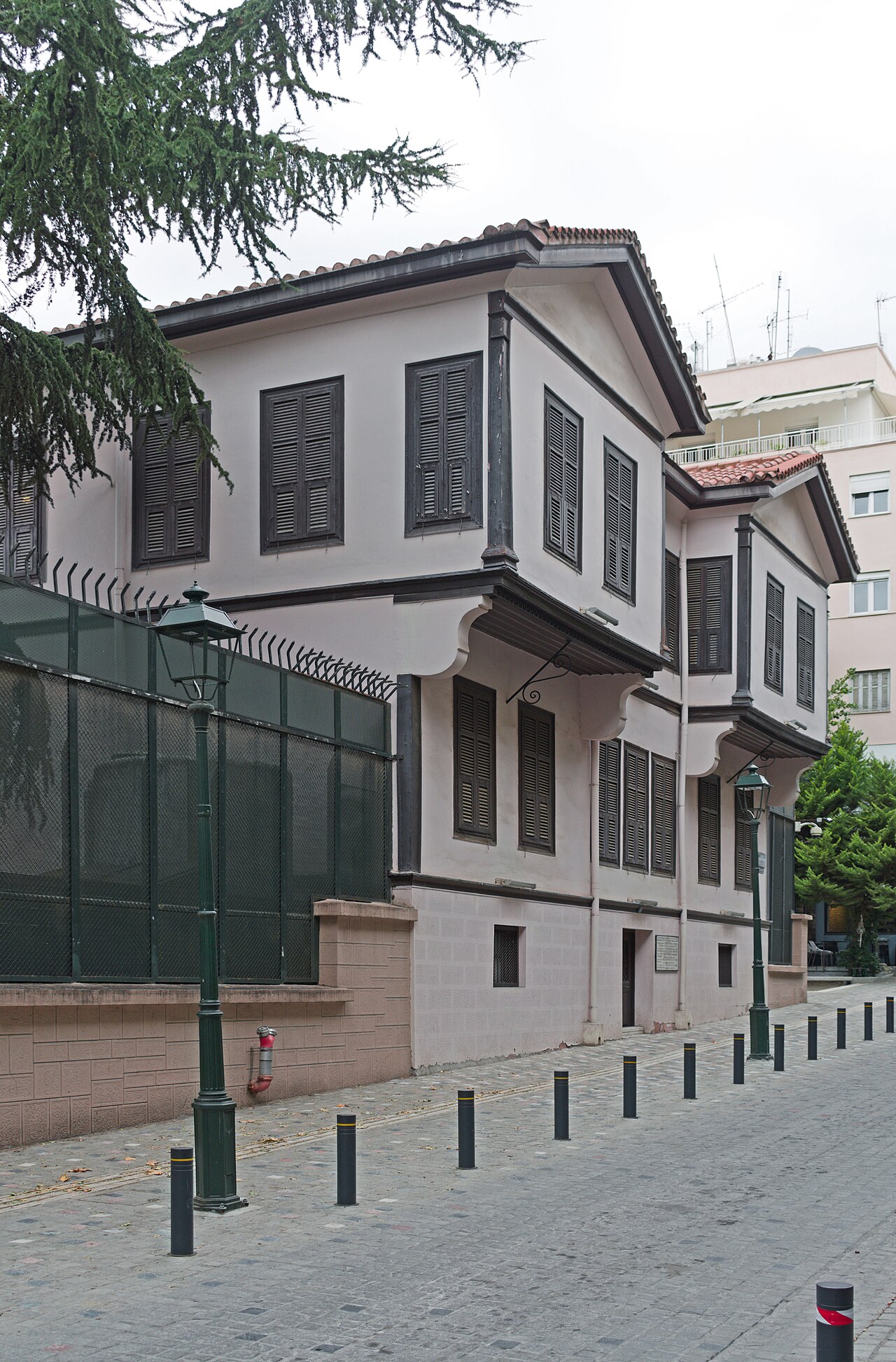
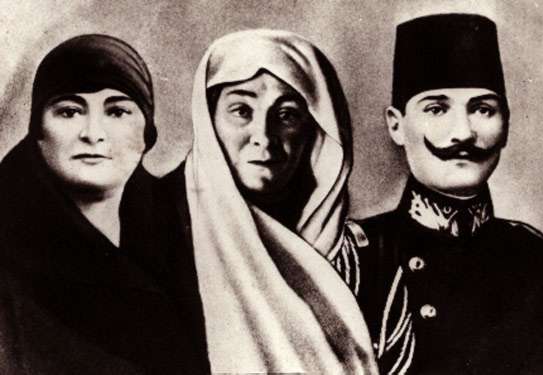
Mustafa was born in this house in 1881. His father was Ali Rıza Efendi, his mother Zübeyde Hanım.
Ali Rıza Efendi worked for a time as a clerk for the pious foundations, then as a customs officer; later he went into the timber trade. Zübeyde Hanım, who came from the Langaza area near Thessaloniki, was a devout and strong-willed woman.
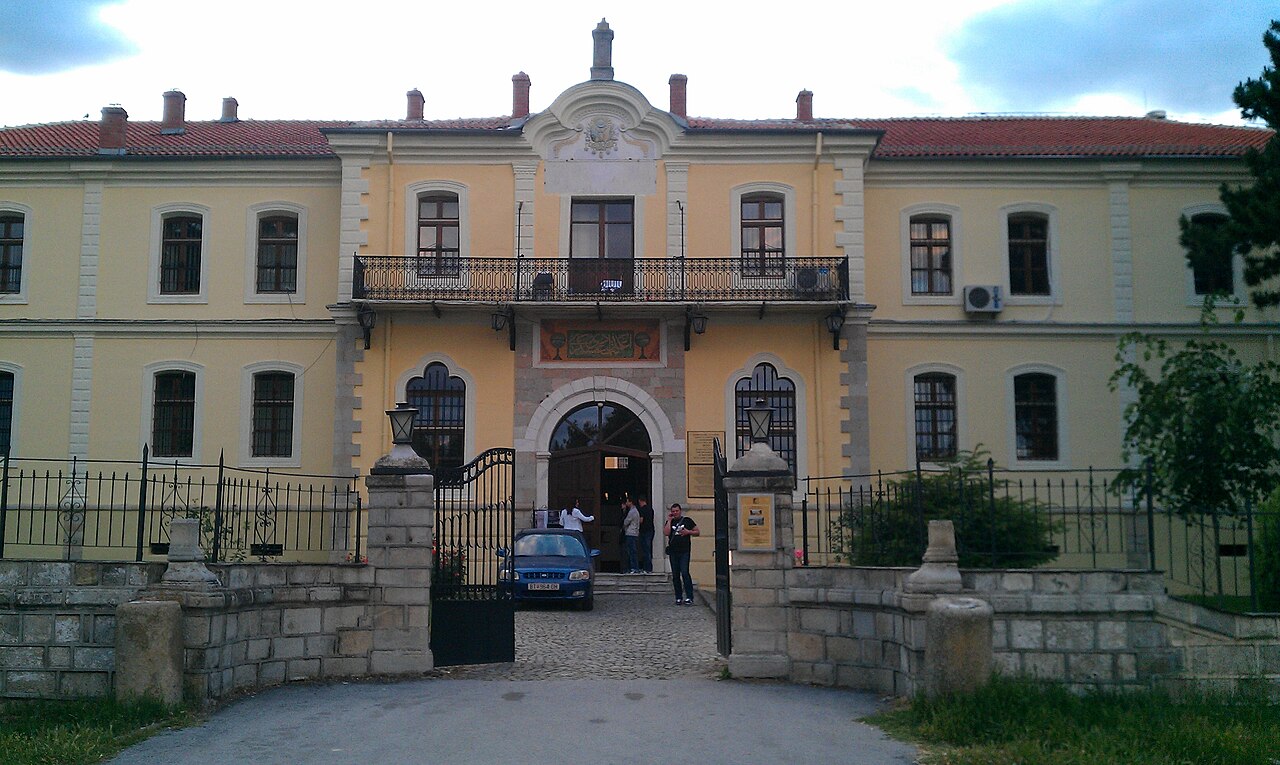
The house was a simple Thessaloniki house: its bay window jutting over the street, its courtyard, its wooden stairs. Today it can be visited as a museum, and in one of its rooms the place where he was born is shown.
The day of his birth had not been recorded. Years later, when he was asked, he pointed to the day that changed the course of his life: 19 May, the day he set foot in Samsun.
The two who survived
Mustafa was the child of a large household; but it was a household that lost its children one by one.
Fatma, Ömer and Ahmet, born before him, died young. Naciye, born after him, also lost her life as a child. Only two of the siblings reached adulthood: Mustafa and his sister Makbule, a few years younger than he.
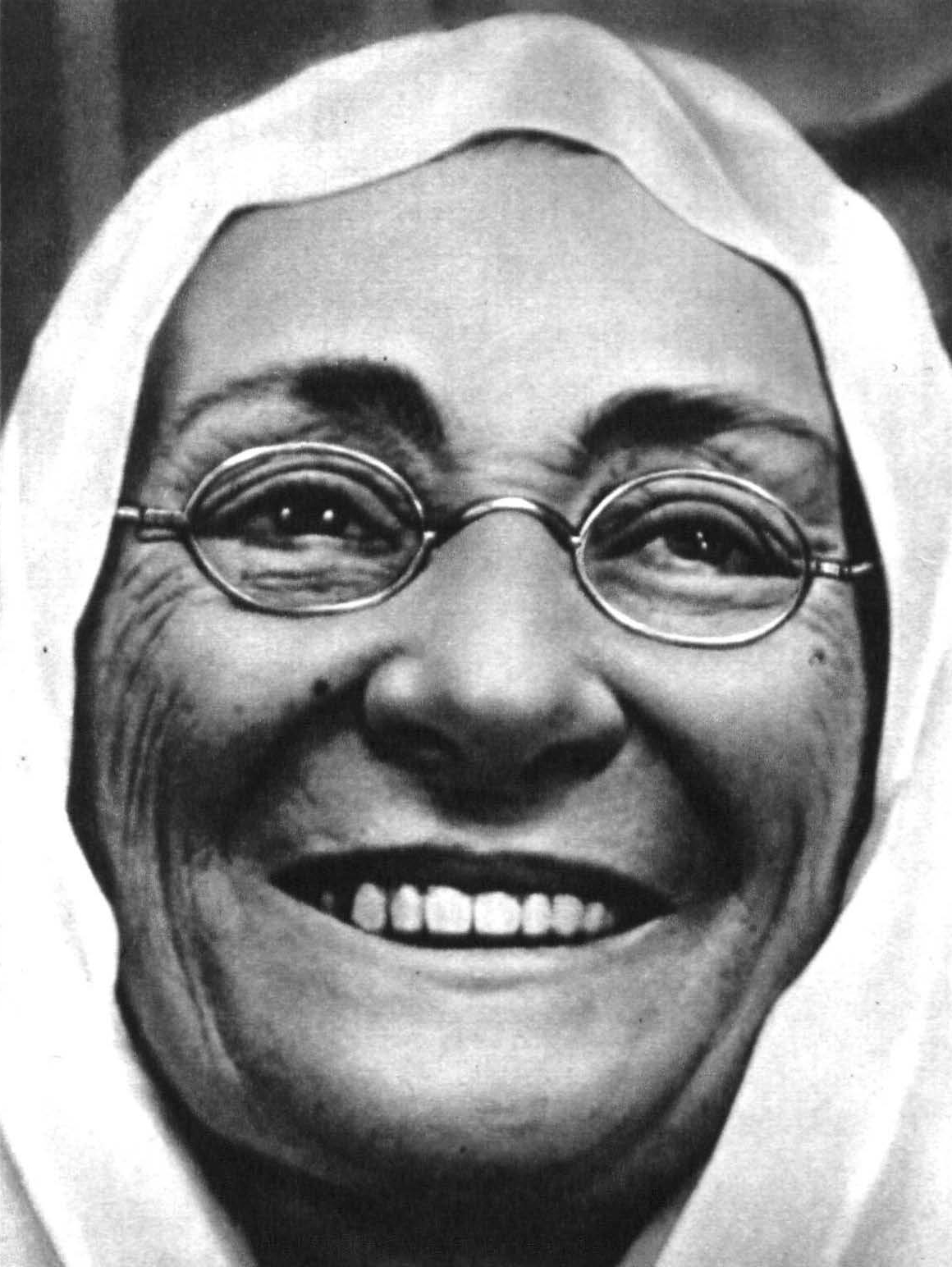
All of Zübeyde Hanım’s hope rested on this surviving son. Mustafa, in turn, remained bound to his mother by a deep love all his life. Makbule became the sister who stood by her elder brother until the end of his life.
First memory: a quarrel over school
Years later, telling journalists about his childhood, he said the first thing he remembered was an argument about school.
“The first thing I remember of my childhood concerns the question of my going to school. Over this there was a fierce argument between my mother and my father.”
In his own account · Vakit newspaper, 10 January 1922
His mother wanted her son to start at the neighbourhood school in the old way, with hymns. His father, however, wanted the school of Şemsi Efendi, newly opened in those years, which taught reading and writing by a new method.
Ali Rıza Efendi found a solution that hurt neither side. Mustafa first started at the neighbourhood school with a ceremony; his mother was content. A few days later he was taken out and enrolled in Şemsi Efendi’s school.
This small household argument was like a miniature of the great question that would later face an entire nation: the old way, or the new?
The fatherless child
Ali Rıza Efendi died while Mustafa was still a small child. Most sources date this death to 1888, when Mustafa was seven.
The family left behind struggled to make ends meet. Zübeyde Hanım took her children to Rapla Farm outside Thessaloniki, to her elder brother Hüseyin Ağa.
Here the city boy came to know the land. By his own account, he and his sister Makbule kept watch in the field, chasing away the crows that plagued the crops. These days without school troubled his mother; her son had to study.
In the end, Mustafa was sent to Thessaloniki to study, to stay with his aunt.
A beating and a decision
In Thessaloniki he was enrolled in the civil middle school. But he could not stay there long.
One day in class he got into a fight with a classmate. The teacher whom the pupils called “Kaymak Hafız” beat him very harshly. Mustafa never went back to that school; nor did his mother send him back.
Left without a school, the boy would once again seek his own path for himself.
The neighbour boy’s uniform
In the neighbourhood, an officer’s son went to the military school. Mustafa would look at his uniform and dream of himself wearing it.
Zübeyde Hanım did not want her son to become a soldier; she was afraid of losing her only son to the front. So Mustafa, without telling his mother, sat the entrance examination for the military middle school and passed. His mother learned what had happened only afterwards.
For the first time, at the age of twelve, he had chosen the direction of his life himself.
“My son, your name is Mustafa, and so is mine… This will not do. There must be some difference between us. From now on, let your name be Mustafa Kemal.”
The words of his mathematics teacher, Captain Mustafa Sabri Bey, in his own account · Vakit, 10 January 1922Kemal
At the middle school his favourite subject was mathematics, and he soon became the best in his class.
His mathematics teacher, Mustafa Sabri Bey, gave this pupil, who bore the same name as he did, a name of his own: Kemal. In Arabic it meant maturity, perfection. From that day on, the boy was known as Mustafa Kemal.
His teacher trusted his knowledge so much that he sometimes left the class in his charge during lessons. Even at that age, his schoolmates accepted the leadership of this serious, quiet, self-assured boy.
His mother’s new home
In these years Zübeyde Hanım married a man named Ragıp Bey; sources give different years for the marriage.
The young Mustafa Kemal found this marriage hard to accept and for a time kept away from his mother’s new home. But his devotion to his mother never lessened. In all the later years of his life, even in his hardest times, he would write her letters and try to bring her to live with him.
The school among the mountains
In 1896 he moved on to the military high school in Manastır (today Bitola). Manastır was one of the most sensitive cities of the empire in the Balkans.
Around the city, Bulgarian, Greek, Serbian and Albanian bands clashed. Here the break-up of the empire was not a subject in a book but a reality spoken of every day.
Thanks to his friend Ömer Naci, he developed a passion for literature and oratory, and tried his hand at writing poetry. Under the influence of his history teacher, he took an interest in history. To improve his French, he also took lessons outside school.
Among his schoolmates were names whose paths would cross his again in later years. But at that time they were all young students asking where the empire was heading.
A pupil’s report card
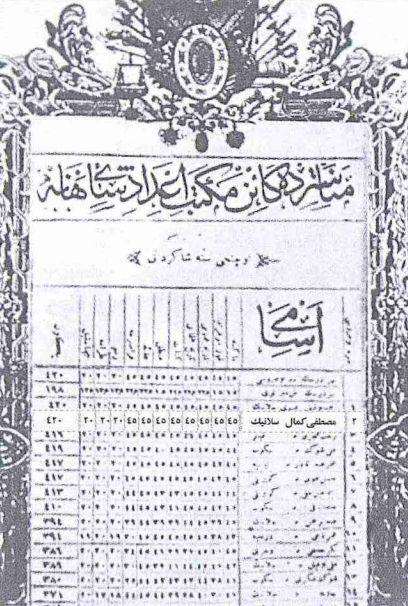
Alongside is the report card of Mustafa Kemal, then a third-year pupil at the military high school in Manastır.
This sheet of paper, written in Ottoman Turkish, holds the school years of the future Commander-in-Chief and Head Teacher (Başöğretmen). He was a pupil who did well in his lessons, disciplined, but one who did not hide his thoughts.
At the beginning of 1899 he finished the high school. Ahead of him now lay the capital of the empire.
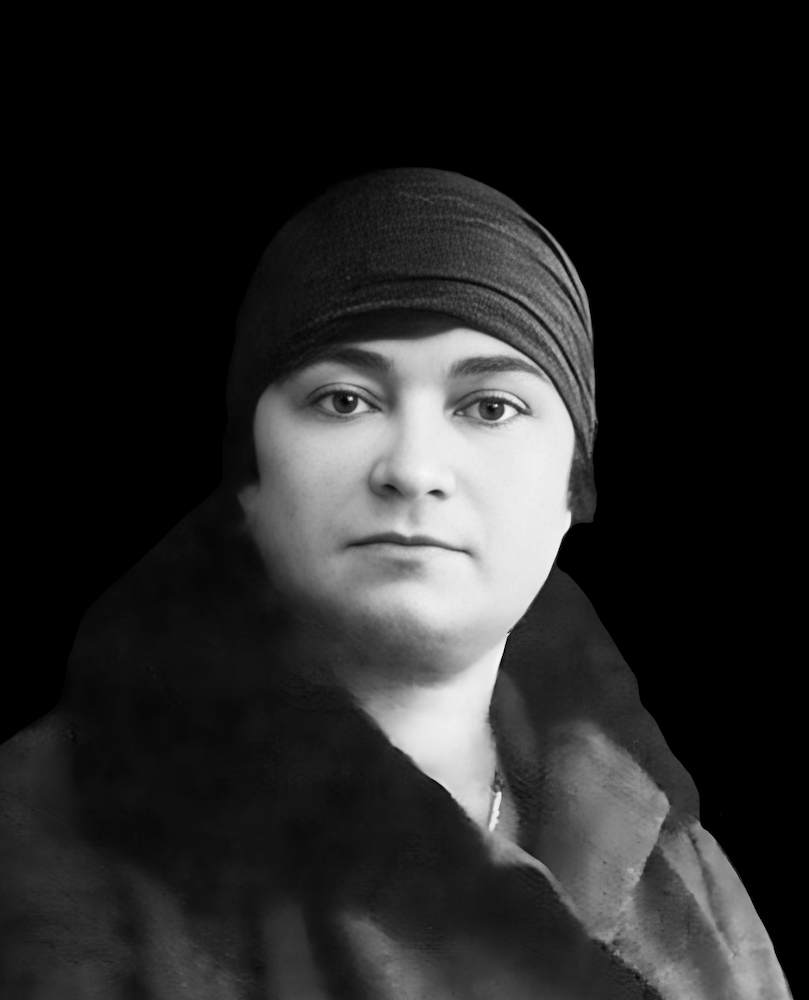
To Istanbul
At eighteen, Mustafa Kemal enrolled at the Harbiye in Istanbul, the Mekteb-i Harbiye-i Şahane (Imperial Military Academy).
Behind him he left the city of his childhood: the quay, the White Tower, his mother, his sister, his father’s grave.
He did not know it that day, but he would be able to return to Thessaloniki only for a few years, as a young officer. Thirteen years later, the city of his birth would fall within the borders of another state, and this pain would become one of the turning points of his life.