When the last bullet of the War of Independence had been fired, Anatolia was exhausted. Cities had burned, villages had emptied, those who could read and write had grown fewer. On 1 November 1922 the Grand National Assembly abolished the sultanate; two weeks later the last sultan of a six-hundred-year-old dynasty left Istanbul aboard a British ship.
A great question remained: in what kind of state would this nation live? Mustafa Kemal’s answer would fill the last fifteen years of his life. This page is those fifteen years.
At his mother’s grave
Victory had been won, but the person he most wanted to make happy died without having seen him for a long time.
Zübeyde Hanım closed her eyes for the last time on 14 January 1923 in Izmir, in the house in Karşıyaka. Her son was travelling in western Anatolia in those days; he received the news far away and could not reach the funeral in time.
When he came to Izmir at the end of January, the first thing he did was to go to his mother’s grave. According to those close to him, he stood silently at the graveside for a long time. In the speeches he gave afterwards he spoke of his mother’s loss as one of the losses endured for the nation’s sake; he said that he regarded giving his life, if need be, to protect the sovereignty of the nation as a debt of honour.
The woman who, as the widow of a customs official in Thessaloniki, had raised her children in poverty did not live to see the proclamation of the new state her son founded. Today her grave in Karşıyaka is a memorial that stands for all the mothers of Turkey.
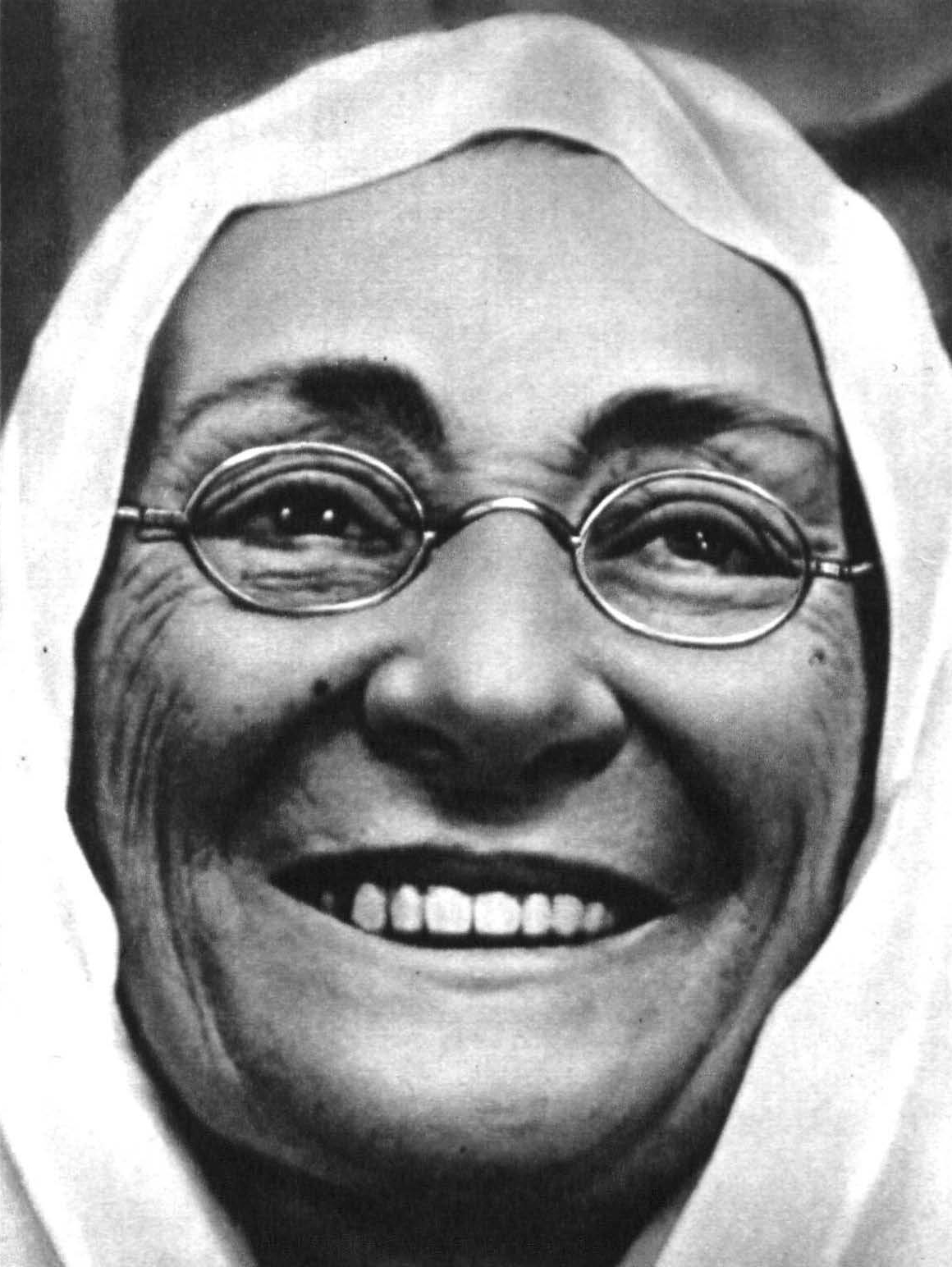
Latife Hanım
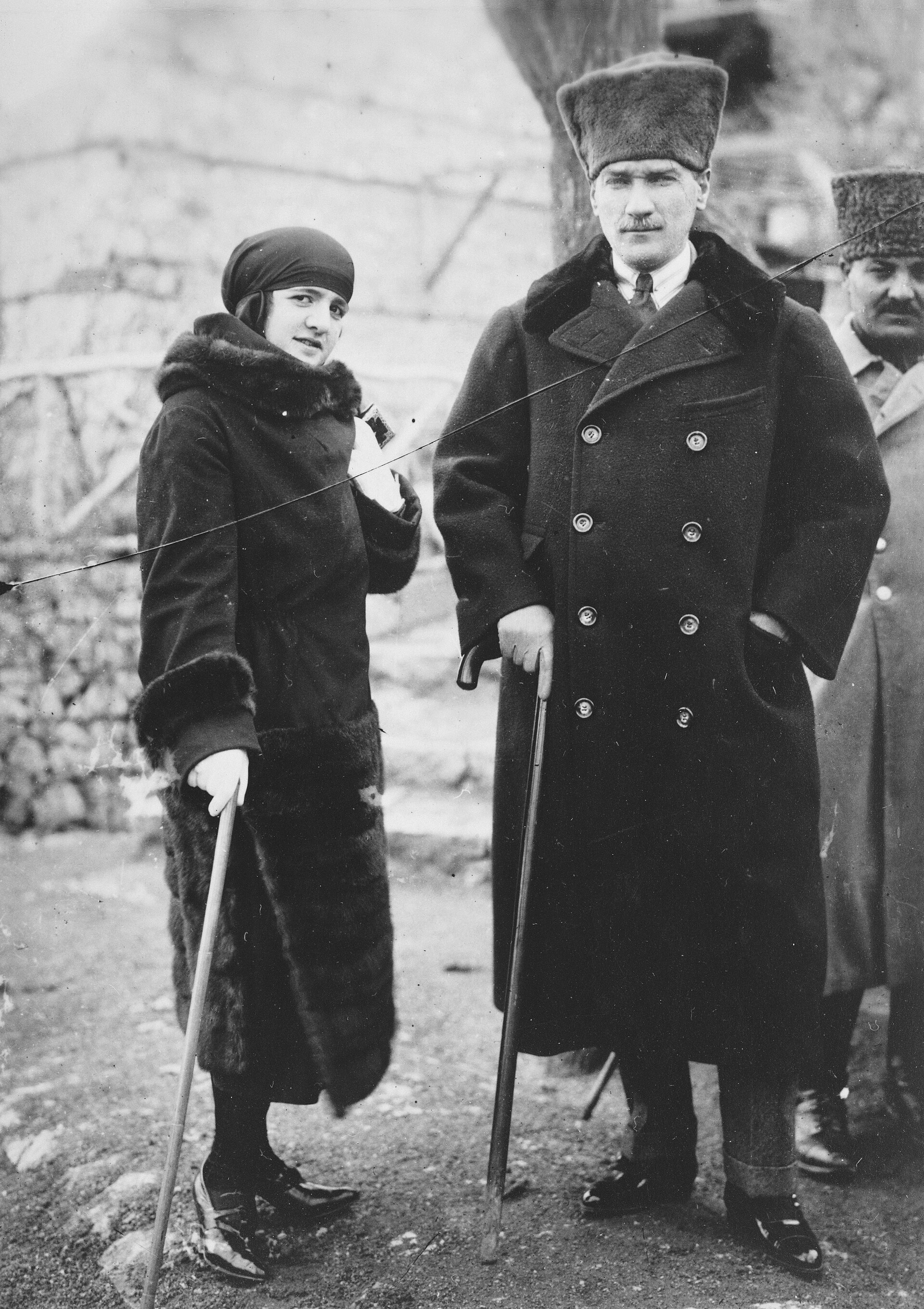
Two weeks after his mother’s death, on 29 January 1923, he married Latife Hanım in Izmir.
Latife Hanım was the daughter of the Izmir merchant Uşakîzade Muammer Bey; she had studied law in Europe, spoke several languages and was a cultured woman. After the wedding she accompanied her husband on his journeys through Anatolia. A “lady” with her face uncovered, walking among the people beside her husband, was in those years a new sight for many.
The marriage did not last long; they separated on 5 August 1925. For the rest of her life Latife Hanım did not speak about this marriage and did not publish her memoirs. Both of them guarded their respect for each other with silence.
A victory won at the table
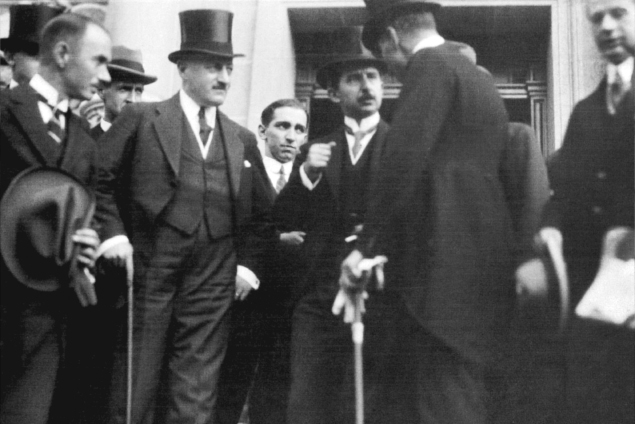
What had been won at the front also had to be set down on paper. The place for this was the Swiss city of Lausanne.
At the head of the Turkish delegation was İsmet Pasha. The talks began in November 1922, broke off in February 1923 and resumed in April. There were months of bargaining over the capitulations, debts, borders and minorities. On the instructions he received from Ankara, İsmet Pasha signed no article that would impair independence.
On 24 July 1923 the treaty was signed. The country that Sèvres had dismembered was recognised by the world within its own borders and as a fully independent state. The capitulations, which for centuries had granted privileges to foreigners, were abolished.
At the beginning of October the last occupation soldiers also left Istanbul. On 6 October 1923 Turkish troops entered the city.
The Republic
On 13 October 1923 the Assembly declared Ankara the capital of the new state. Sixteen days later the state was given its name as well.
Ankara at that time was a small, dusty town on the steppe. But it was the place from which the National Struggle had been led, where the Assembly had met. Instead of the palaces of Istanbul, this town, built up by the nation’s own hands, was chosen.
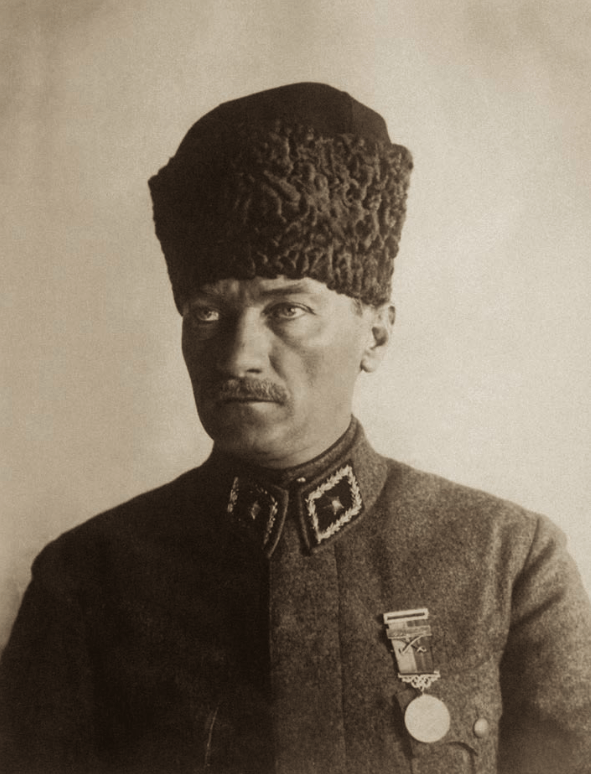
On the evening of 29 October 1923 the Assembly adopted the amendment to the Teşkilât-ı Esasiye Kanunu (the constitution): “The form of government of the State of Turkey is the Republic.” In the same session Mustafa Kemal Pasha was elected first president with every vote. That night Ankara celebrated with cannon salutes.
He was forty-two years old. The rest of his life would be spent filling this word with meaning.
Three laws in a single day
On 3 March 1924 the Assembly adopted three laws on the same day. They decisively set the direction of the new state.
The first abolished the caliphate; the members of the Ottoman dynasty were sent abroad. The second abolished the Ministry of Religious Affairs and Pious Foundations (Şer’iye ve Evkaf Vekâleti). The third was the Tevhid-i Tedrisat Kanunu (Law on the Unification of Education): all the schools in the country were placed under the Ministry of Education (Maarif Vekâleti), that is, under a single national system of education.
From then on, what a child would learn would be decided not by their neighbourhood, their religious community or a foreign mission, but by the state’s school, the same for all children.
“Tevhid-i Tedrisat” means unity of education. In place of disconnected institutions such as the madrasas, foreign schools and new-style schools, a single, secular school system open to everyone was established.
To the teachers
In September 1924 he returned, this time as president, to Samsun, where five years earlier he had stepped off a steamer.
He had come aboard the cruiser Hamidiye. In the city he met with teachers and gave them a task no different from that of the soldier at the front: to save the nation from ignorance. The best-known sentence of this speech would be written on the walls of every school.
“For everything in the world, for civilisation, for life, for success, the truest guide is knowledge, is science.”
Speech to teachers in Samsun, 22 September 1924 · Söylev ve Demeçler II (Speeches and Statements)
Mürşit, the word for “guide”, means one who shows the way. In his view the compass of the new Turkey should be not rote learning and tradition, but observation, experiment and reason.
A hat in his hand
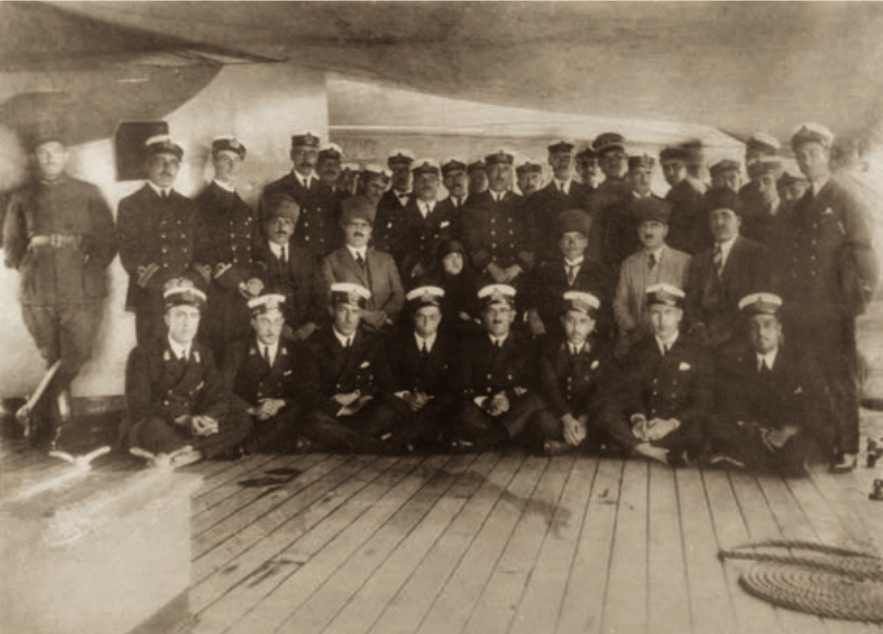
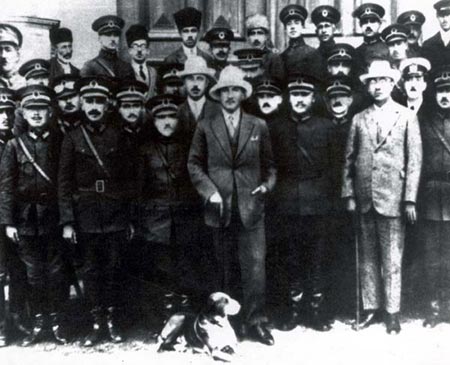
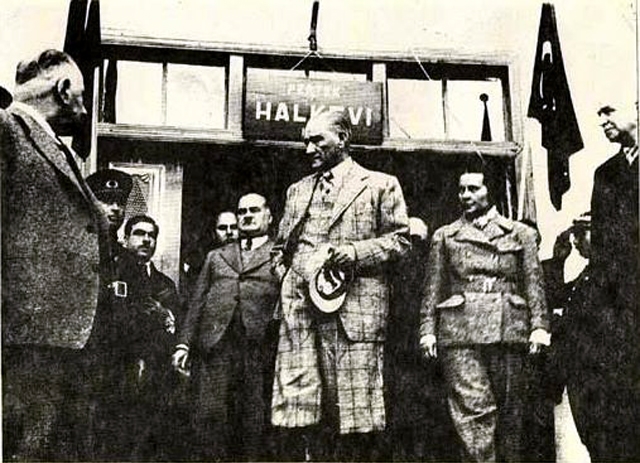
When he came to Kastamonu in August 1925 there was no kalpak (fur cap) on his head; in his hand he held a panama hat.
He did this deliberately, in one of the regions known as the most conservative. In Kastamonu, and a few days later in İnebolu, he addressed the people: whatever the dress of the civilised nations was, that should be the dress of the Turkish nation too. He explained that dress was not a matter of outward appearance, but a matter of mentality.
On 25 November 1925 the Hat Law was passed. In the same year the dervish lodges (tekke and zaviye) were closed; then the international time and calendar were adopted. Turkey began to count the day and the year by the same clock as the rest of the world.
A farm on the steppe
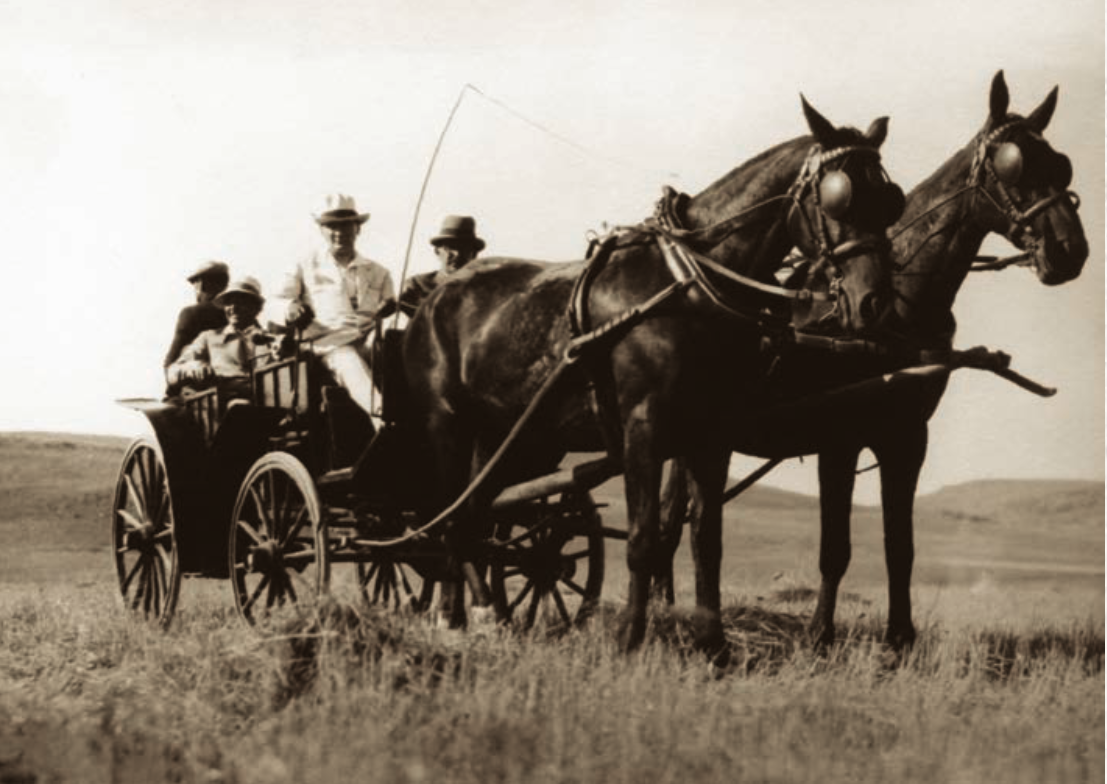
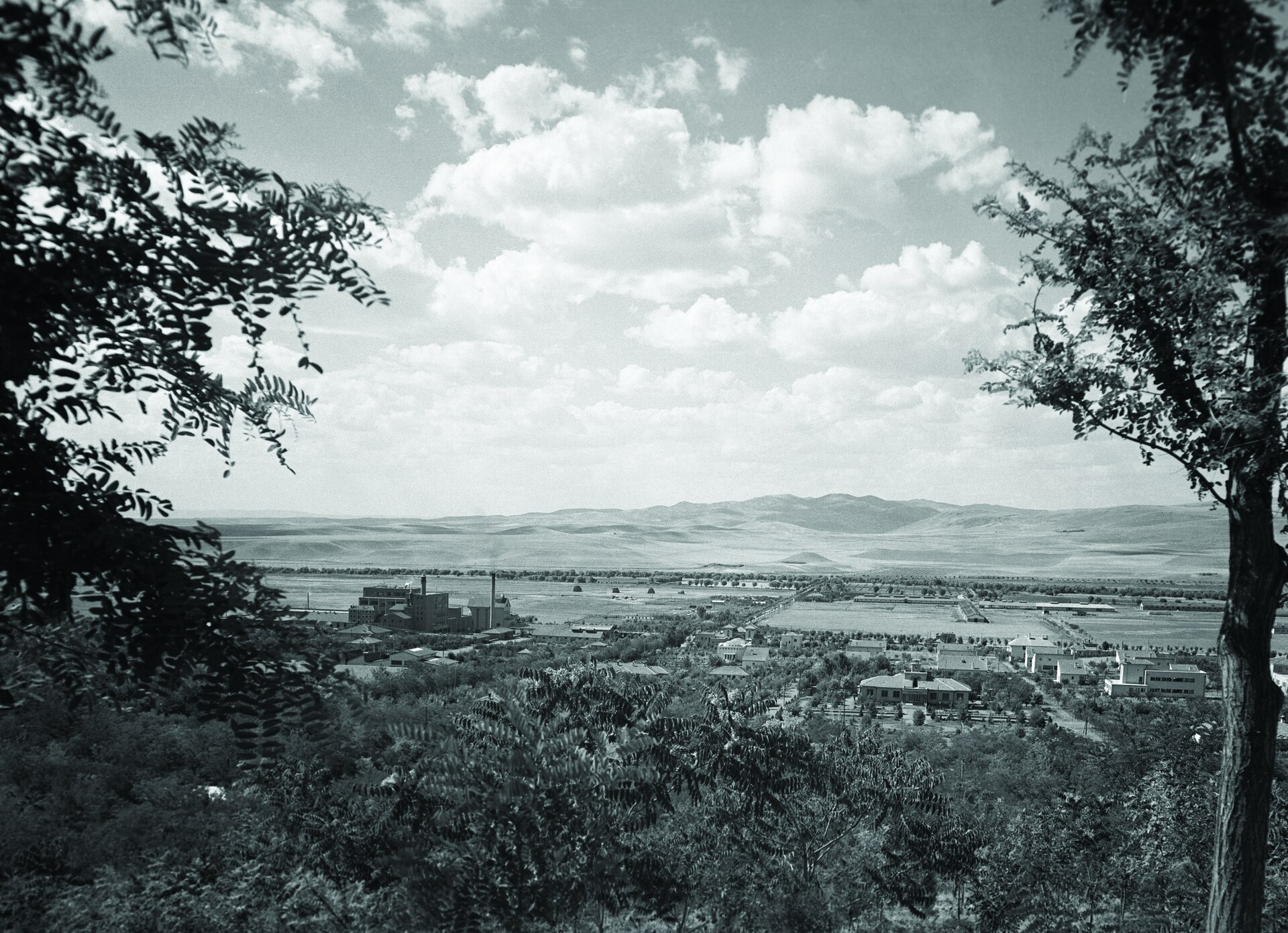
In the spring of 1925, west of Ankara, he bought a barren, marshy stretch of land on which no one believed anything would grow.
His aim was to set an example for the people: to show that modern farming was possible on this soil, that trees could grow. The marshes were drained, saplings planted; in time a dairy, a brewery, a bakery and workshops were set up on the farm.
He came to the farm often, sometimes driving the carriage himself. In 1937 he donated his farms to the state treasury. Today it lives on in the middle of Ankara under the name Atatürk Forest Farm (Atatürk Orman Çiftliği).
A new family law
On 17 February 1926 the Assembly adopted the Turkish Civil Code, adapted from the Swiss Civil Code. The law came into force on 4 October 1926.
With this law monogamy became the rule. Marriage would be by an official civil ceremony performed before a state official. The right to divorce was granted to women as well; in inheritance, daughters and sons were counted as equal. In court a woman’s testimony had the same value as a man’s.
The Turkish woman who woke one morning had become, if only on paper, the equal of her husband and her father. It would take time for that paper to become life; but the door was now open.
A speech that lasted six days
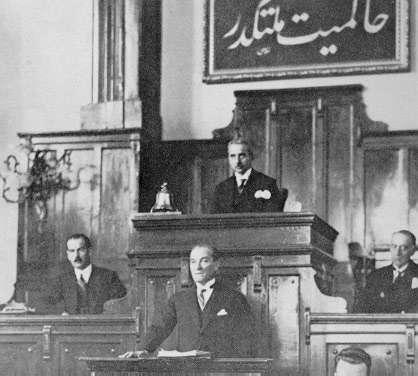
In October 1927, at the congress of the Republican People’s Party (Cumhuriyet Halk Fırkası), he took the rostrum and over six days gave a speech totalling more than thirty-six hours.
The speech recounted, with its documents and telegrams and through his own eyes, everything that had happened from the beginning of the National Struggle to the first years of the Republic. It was later printed as a book under the title “Nutuk” (the Great Speech).
“On the 19th day of May in the year 1335, I landed at Samsun.”
The first sentence of the Nutuk · 1927
At the end of the speech he addressed the youth. The “Gençliğe Hitabe” (Address to the Youth), read today in every school, is the last pages of this six-day speech.
At the blackboard
The Arabic letters did not match the sounds of Turkish; learning to read and write took years. The great majority of the people could not read.
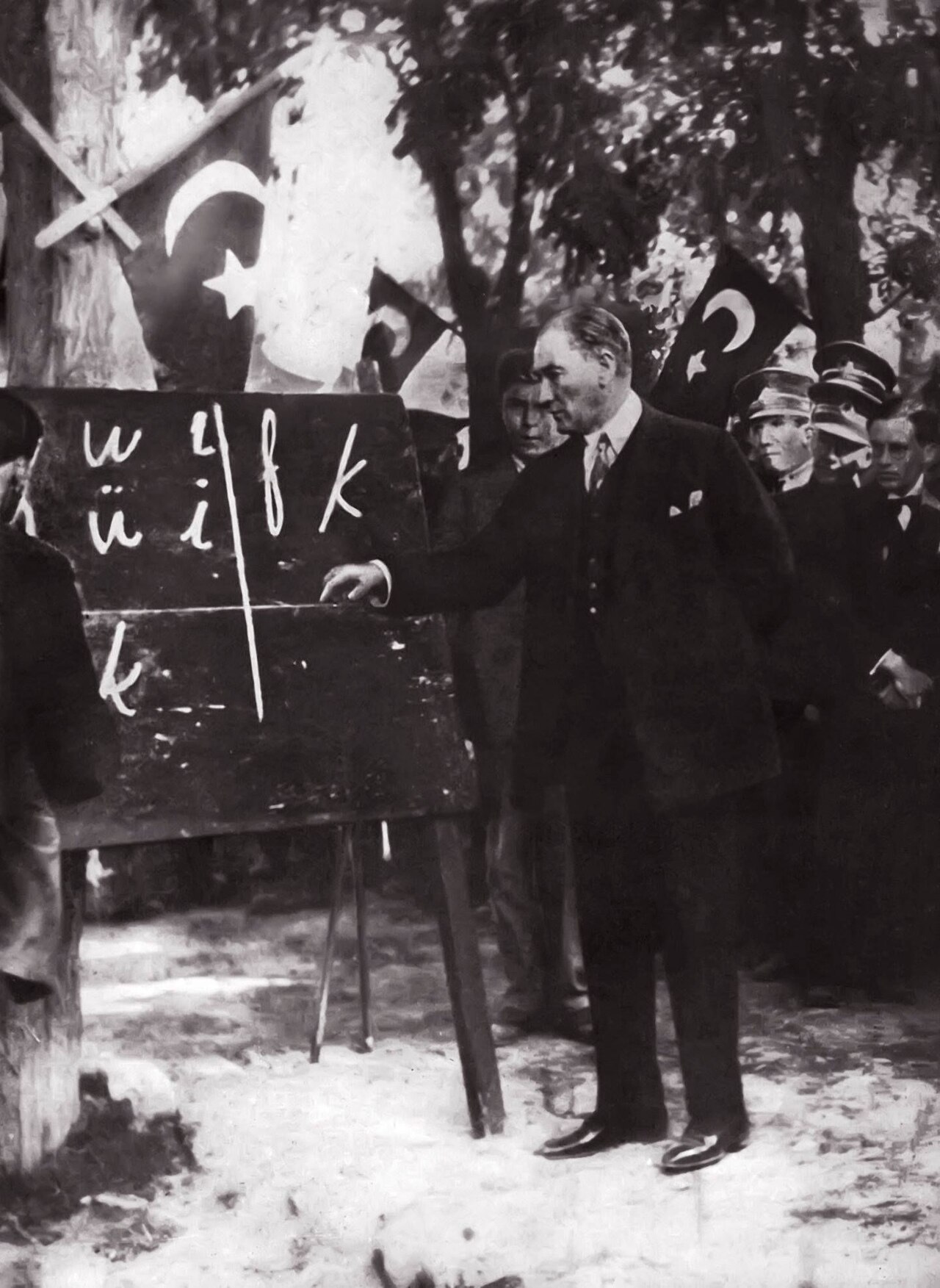
In the summer of 1928 a commission prepared a new Turkish alphabet based on Latin letters. On the night of 9 August 1928 in Istanbul, at a public festival at Sarayburnu, he himself announced the new letters to the people for the first time.
“Our harmonious, rich language will show itself with the new Turkish letters.”
Sarayburnu speech, 9 August 1928 · Söylev ve Demeçler II (Speeches and Statements)
In the weeks that followed he travelled through Anatolia; in the towns he stood at the blackboard and taught the letters himself. On 1 November 1928 the new letters were adopted by law. In the Millet Mektepleri (Nation’s Schools), opened on 1 January 1929, hundreds of thousands of adults learned to read and write. He agreed to become the head teacher of the Nation’s Schools; since that day he has also been remembered as the “Başöğretmen” (Head Teacher).
Evenings at Çankaya
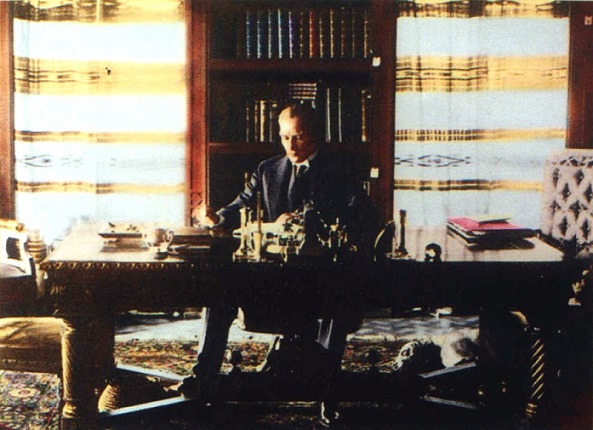
By day, affairs of state; by night, long dinner tables. At the mansion in Çankaya the evenings often lasted until morning.
At the table sat ministers, deputies, writers, teachers, scholars. One night the subject was history, another night language, another economics. An idea would be put forward, debated, and sometimes by the next morning it had become a draft law.
The journalist Falih Rıfkı Atay, who sat at that table for years, describes the Çankaya table less as a gathering for entertainment than as a place of work and debate: Atatürk would ask questions, get the other person talking, argue at length with whoever objected, and finally make his decision.
The mansion’s library was filled with thousands of books. He read history, language, law, military science and economics; as he read he underlined lines and made notes in the margins. Most of these books are kept today at Anıtkabir, together with the marks of his pen.
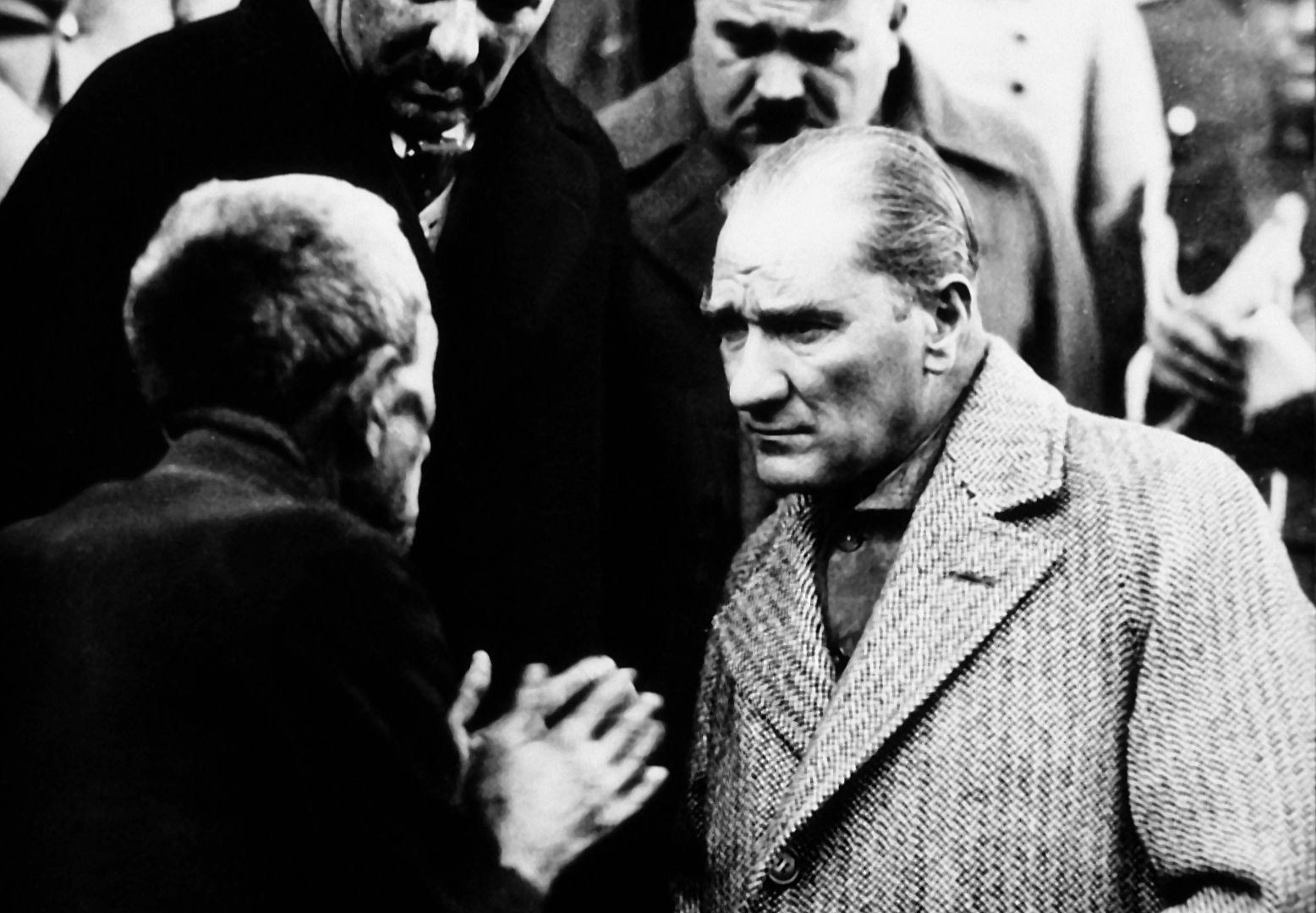
Women in the Assembly
After the Civil Code came politics. Turkish women won the vote step by step, but before those of many countries in Europe.
With a law passed on 3 April 1930, women gained the right to vote and stand in municipal elections. In 1933 the elections for village headmen were opened to them as well. On 5 December 1934 the Assembly amended the constitution and granted women the right to vote and stand for parliament.
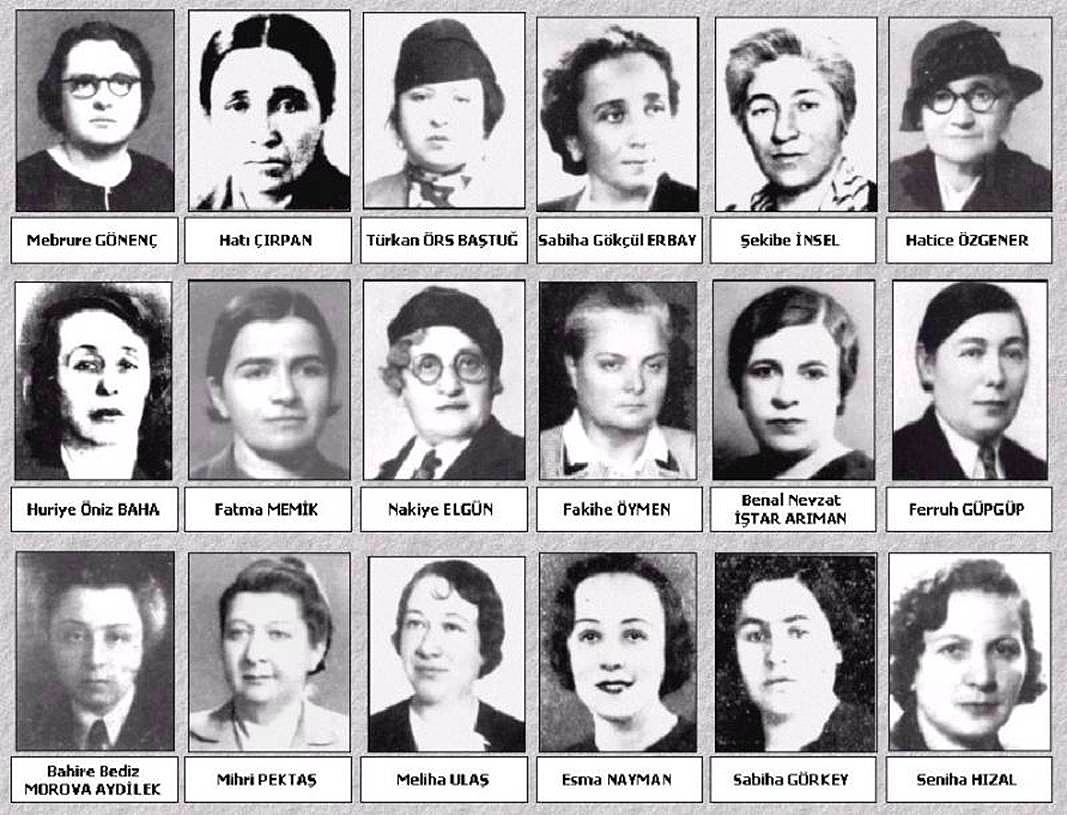
In the elections of 8 February 1935 seventeen women deputies were elected; with a by-election held shortly afterwards the number rose to eighteen. When the Assembly opened on 1 March 1935, among the benches there were teachers, doctors, writers and a village woman.
Women could vote in France only in 1944, in Italy in 1946, and in Switzerland, at the federal level, in 1971.
History, language and the university
He believed that for a nation to know itself, it had to know its history and its language. These two subjects occupied him more than any others in the last years of his life.
On 12 April 1931 the Society for the Study of Turkish History (Türk Tarihi Tetkik Cemiyeti), the foundation of today’s Turkish Historical Society, was established. On 12 July 1932 the Society for the Study of the Turkish Language (Türk Dili Tetkik Cemiyeti), today’s Turkish Language Association (Türk Dil Kurumu), was born. In September of the same year he followed for days the sessions of the first Turkish Language Congress, held at Dolmabahçe.
In 1933 the old Darülfünun was closed; in its place Istanbul University opened on 18 November 1933. Many scholars fleeing persecution in Europe taught at this university and at the newly opened schools in Ankara. In 1936 the Faculty of Language and History–Geography was founded in Ankara.
He himself prepared a geometry book with new Turkish terms. Some of the words every pupil knows today, such as “üçgen” (triangle), “açı” (angle) and “kenar” (side), are the fruit of this work.
The tenth year
On the Republic’s tenth anniversary, at the Ankara Hippodrome, he stood before the crowd and addressed the nation.
“In a short time we have done many and great things.”
Onuncu Yıl Nutku (Tenth Anniversary Speech), 29 October 1933
In ten years the railways had grown longer, factories had begun to be built, schools had multiplied, and a generation reading with the new letters had begun to grow up. But the real weight of the speech looked to the future: to raise the national culture above the level of contemporary civilisation was the measure of the work still to be done.
He ended his speech with a sentence that would later spread throughout the country.
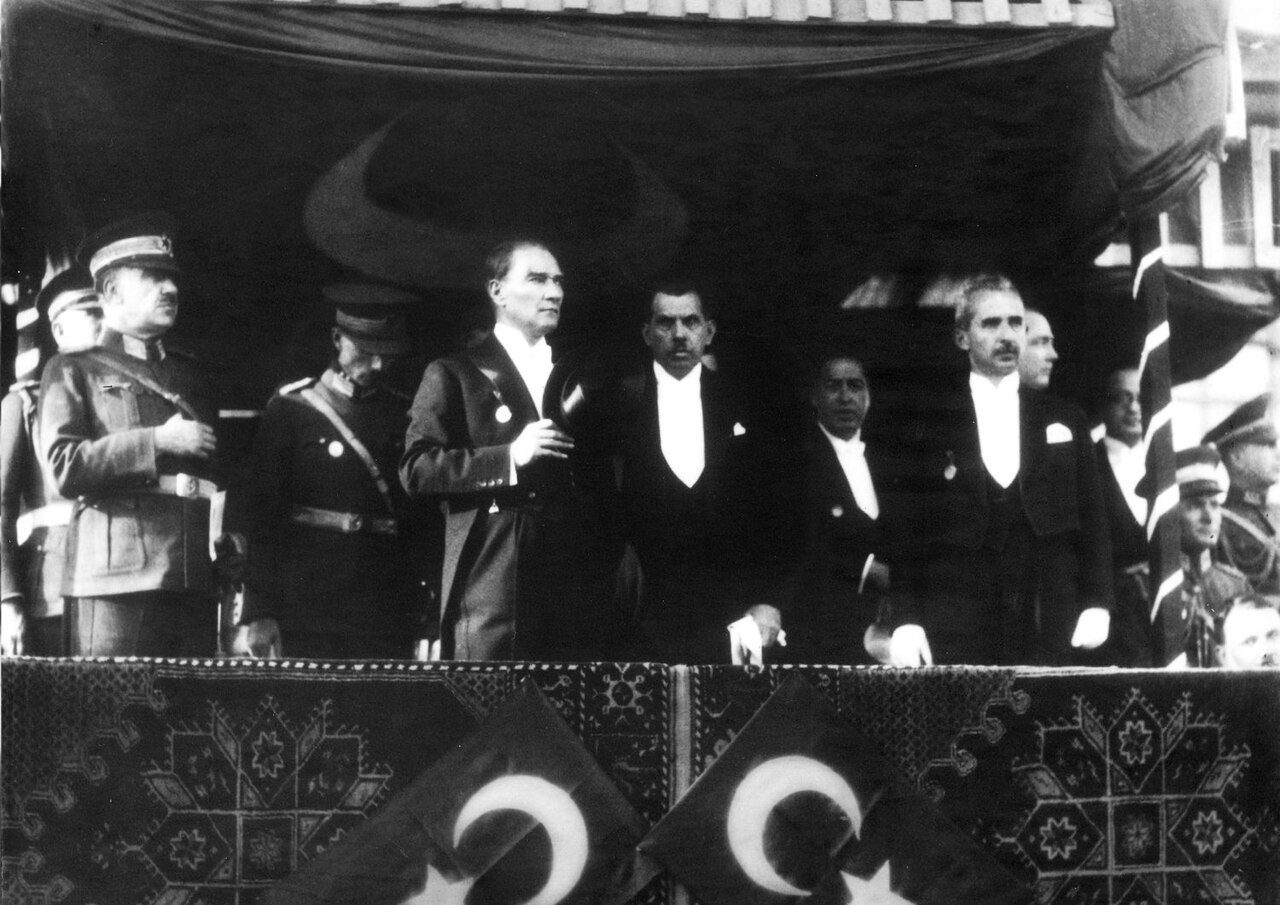
“How happy is the one who says, ‘I am a Turk!’”
The last sentence of the Tenth Anniversary Speech · 29 October 1933 · Ne mutlu Türk’üm diyene!Atatürk
Until that day most people in Turkey had no surname. People were known by their father’s name, by a nickname or by their home town.
On 21 June 1934 the Surname Law was adopted. Every family would choose a surname for itself. In November the old titles such as “pasha”, “bey” and “efendi” were also abolished.
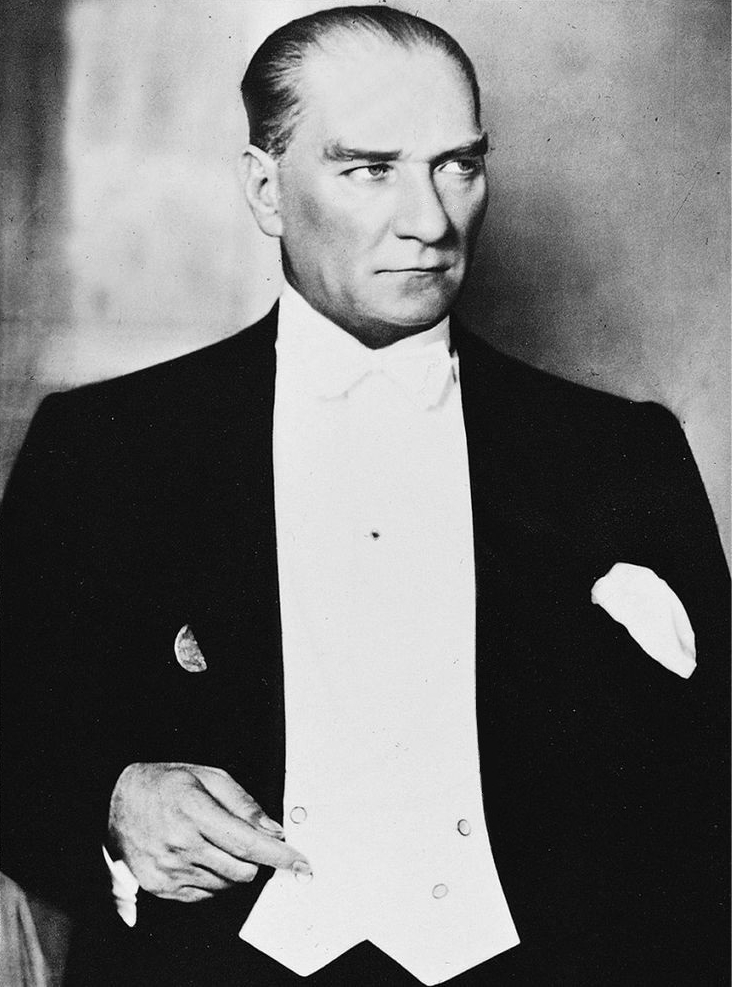
On 24 November 1934 the Assembly, by a special law, gave Mustafa Kemal the surname “Atatürk” (Father of the Turks). This name could be taken by no one else. The child born as Mustafa in Thessaloniki, given the name Kemal at school, called Gazi in the war, was now remembered as the father of a whole nation.
In the same year he also gave a surname to his closest friend, İsmet Pasha, the hero of Lausanne: İnönü.
The Straits are ours again
One matter had been left unfinished at Lausanne: the Straits. Their shores had been demilitarised, their administration left to an international commission.
In the mid-1930s winds of war were blowing in Europe. Turkey sought a change to the regime of the Straits not by arms, but at the table and through law. With the convention signed on 20 July 1936 in the Swiss town of Montreux, Turkish sovereignty over the Straits was recognised; Turkish soldiers returned to the shores.
Atatürk had summed up this path in foreign policy in a brief principle: peace begins at home and spreads to the world. Treaties of friendship were made with neighbours; the Balkan Entente was signed in 1934, the Saadabad Pact in 1937.
He first wrote this principle on 20 April 1931, in the election manifesto of the Republican People’s Party published over his own signature: “We are working for peace at home and peace in the world.” In the fifteen years from the proclamation of the Republic to his death, Turkey went to war with no state. It took the Mosul question to the League of Nations and closed it with the Treaty of Ankara, signed in 1926 with Britain and Iraq.
“Peace at home, peace in the world.”
Atatürk’s principle of foreign policy · Yurtta sulh, cihanda sulhHis adopted children
He had no child of his own. But his home was never without children.
Over the years he took many children under his protection, educated them, raised them: Afet, Sabiha, Rukiye, Zehra, Nebile, Ülkü; and among the boys, Mustafa and Abdürrahim. Some became historians, some teachers. Afet İnan became one of the founders of the Turkish Historical Society and a professor of history.
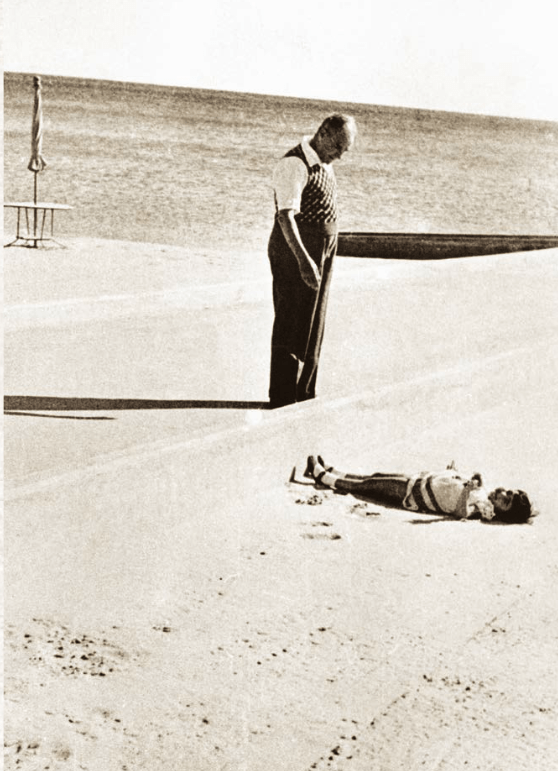
The youngest of them was Ülkü. At the table, on journeys, on the beach at Florya, she was always by his side. Beside this text, Atatürk can be seen in the summer of 1936 at Florya, looking at Ülkü as she lies stretched out on the sand.
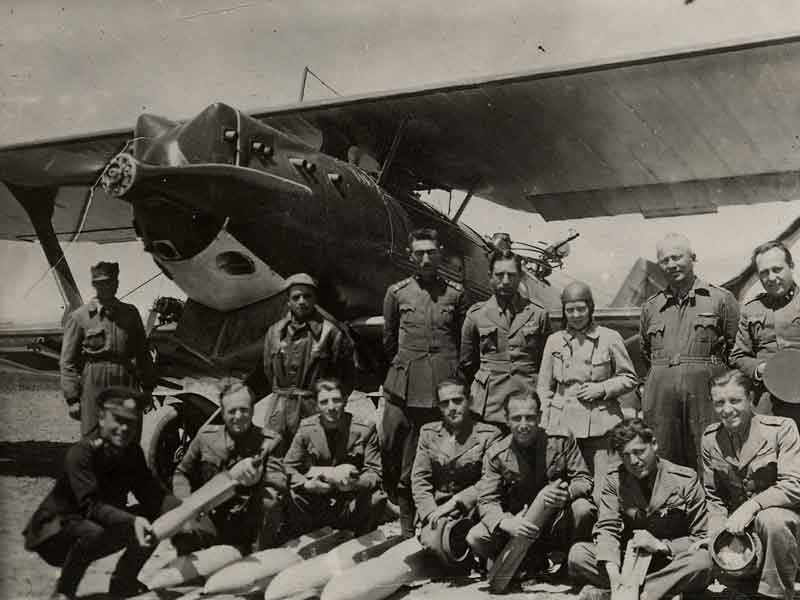
Sabiha gave him one of his greatest moments of pride. Atatürk had given her her surname: Gökçen, that is, “belonging to the sky”. She received flight training at Türkkuşu and in Eskişehir and became Turkey’s first woman military pilot. She is counted among the world’s first women combat pilots.
The education of girls mattered to him in a special way. In his speeches he often said that a society cannot move forward while leaving its women behind. He wanted girls, like boys, to study and to have a profession; each of his adopted daughters became an example of that belief.
The last cause: Hatay
One piece of land remained that lay within the borders of the Misak-ı Millî (National Pact) but had not been resolved at Lausanne: Alexandretta (İskenderun) and Antioch (Antakya), that is, Hatay.
The region was attached to Syria, which was under French administration. When it became clear in 1936 that France would withdraw from Syria, Atatürk is reported to have told those close to him that he regarded this matter as his own personal cause. The question was taken to the League of Nations; in 1937 the Sanjak was granted a separate status.
Despite his illness, in the spring of 1938 he travelled south, to Mersin and Adana; he inspected military units for hours under the sun. On 4 July 1938 an agreement was signed between Turkey and France; the next day Turkish troops entered Hatay. On 2 September 1938 the State of Hatay was founded.
He did not live to see Hatay join Turkey. That came about seven months after his death, in the summer of 1939.
Weariness and the sea
The first signs appeared in 1937: fatigue, itching, nosebleeds. He paid them no heed and went on working.
At the beginning of 1938, while in Yalova, he fell seriously ill. As soon as he had recovered a little he went to Ankara, and then, because of the Hatay question, to the south. The journey to Mersin and Adana in May 1938 exhausted him greatly. It was his last journey through the country.
After examinations by Turkish and foreign physicians the diagnosis was confirmed: cirrhosis of the liver. The physicians wanted him to rest and to take the sea air. The man who all his life had not known how to rest was, for the first time, forced to slow down.
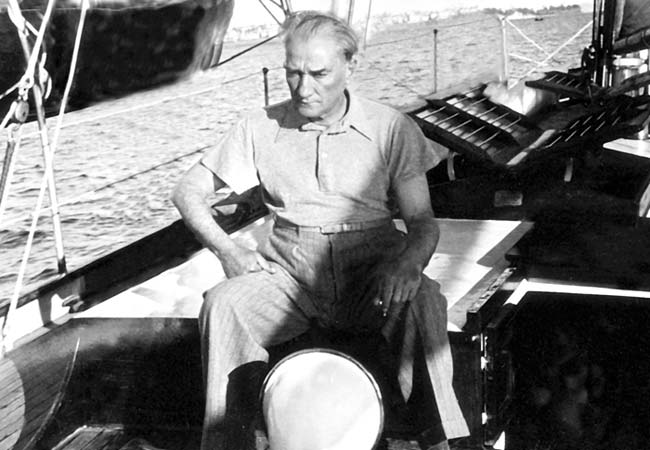
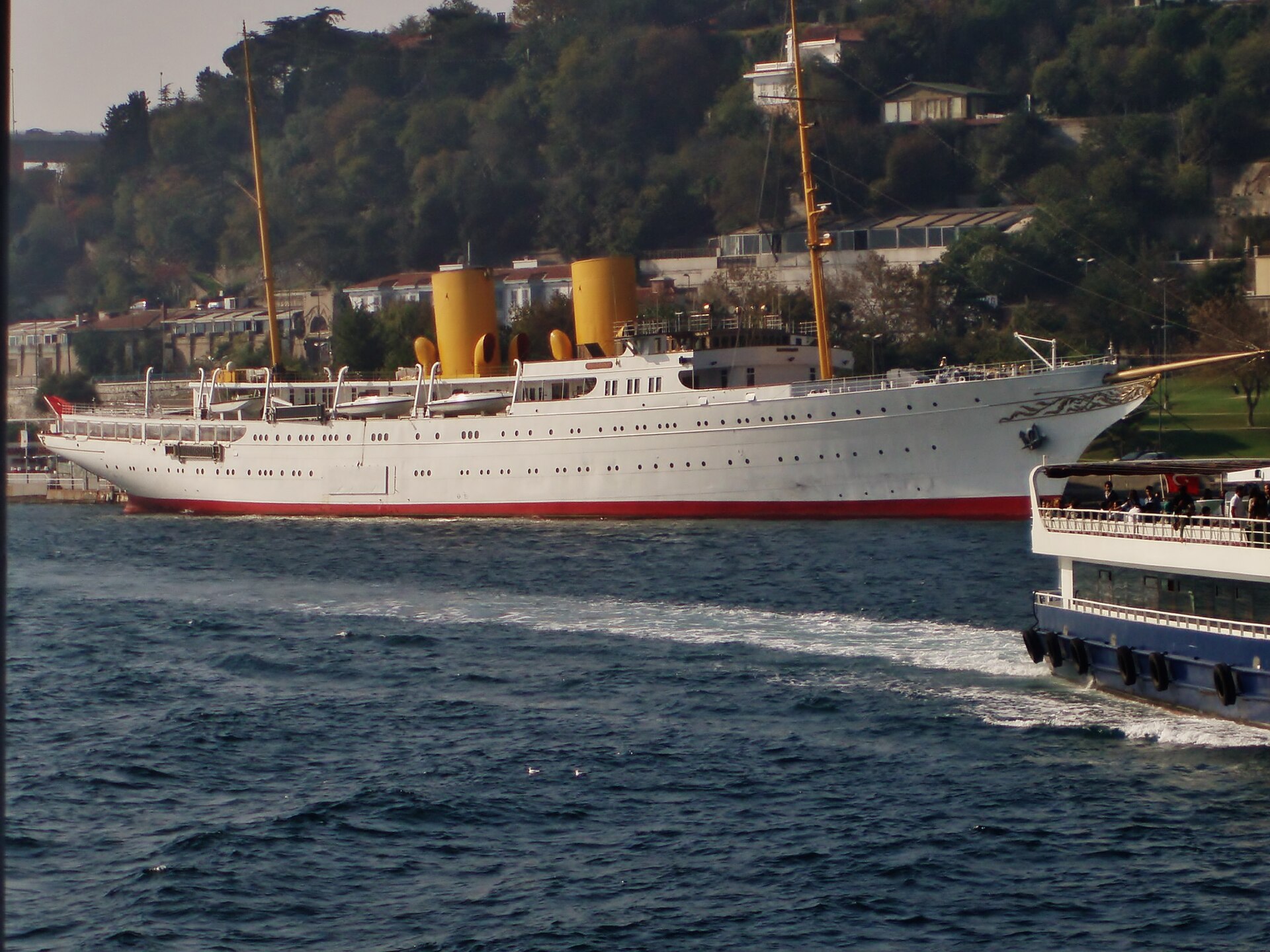
For this reason the state bought a large yacht for him: the Savarona. At the beginning of June the yacht dropped anchor off Dolmabahçe. Until the end of July Atatürk spent his weeks on this yacht, in the air of the Bosphorus; he went on short sea trips and received statesmen here. It was also in these days that he received the news of the Hatay agreement of 4 July, and was overjoyed.
When his illness worsened at the end of July, he was taken off the yacht and moved to Dolmabahçe Palace. He would never leave that palace again.
The will
On 5 September 1938, knowing how serious his illness was, he wrote his will in his own hand.
He had not accumulated money or property. He left the cash and shares remaining to him to the Republican People’s Party; but he wrote out one by one how their income was to be used. He set aside a lifelong income for his sister Makbule and for his adopted children. He asked that İsmet İnönü’s children be helped with their higher education.
As for the remaining income, he willed that it be given to two institutions he himself had founded: the Turkish Historical Society and the Turkish Language Association.
This, too, was one of his last wishes: that even after his death this nation should go on researching its history and its language.
Before the will, in 1937, he had donated all his farms, the Forest Farm first among them, to the treasury, that is, to the nation.
The celebration he could not attend
As the Republic turned fifteen, the man who founded it lay in his bed at Dolmabahçe.
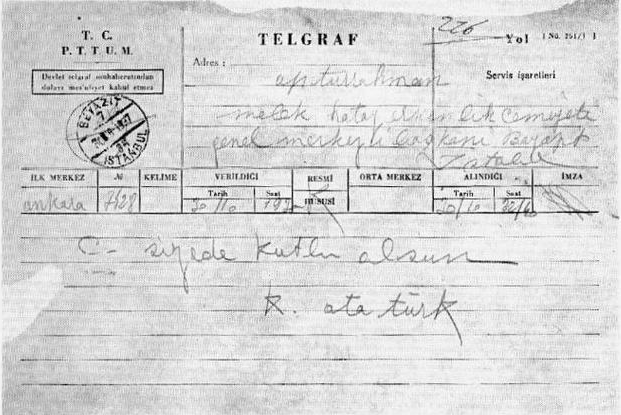
In mid-October he fell into a coma for the first time; a few days later he regained consciousness. He very much wanted to go to Ankara and take part in the ceremonies; the physicians did not allow it. On 29 October 1938 the message he wrote to the army was read on his behalf at the ceremony in Ankara by Prime Minister Celal Bayar. On 1 November the opening speech of the Assembly was again read on his behalf by Celal Bayar.
Then the illness grew worse again. He lay in a room of Dolmabahçe looking out on the Bosphorus. His sister Makbule, his adopted children, his close friends and his physicians did not leave his side. From 8 November onwards official bulletins on his health began to be published again. The whole country waited by the radio and the newspapers.
The child born in Thessaloniki, a port city, was living his last days fifty-seven years later in another port city, in a room looking out on the sea. He was leaving behind him an assembly, an alphabet, a law, schools, factories, trees, and a nation standing on its own feet.