The Tenth Anniversary Speech
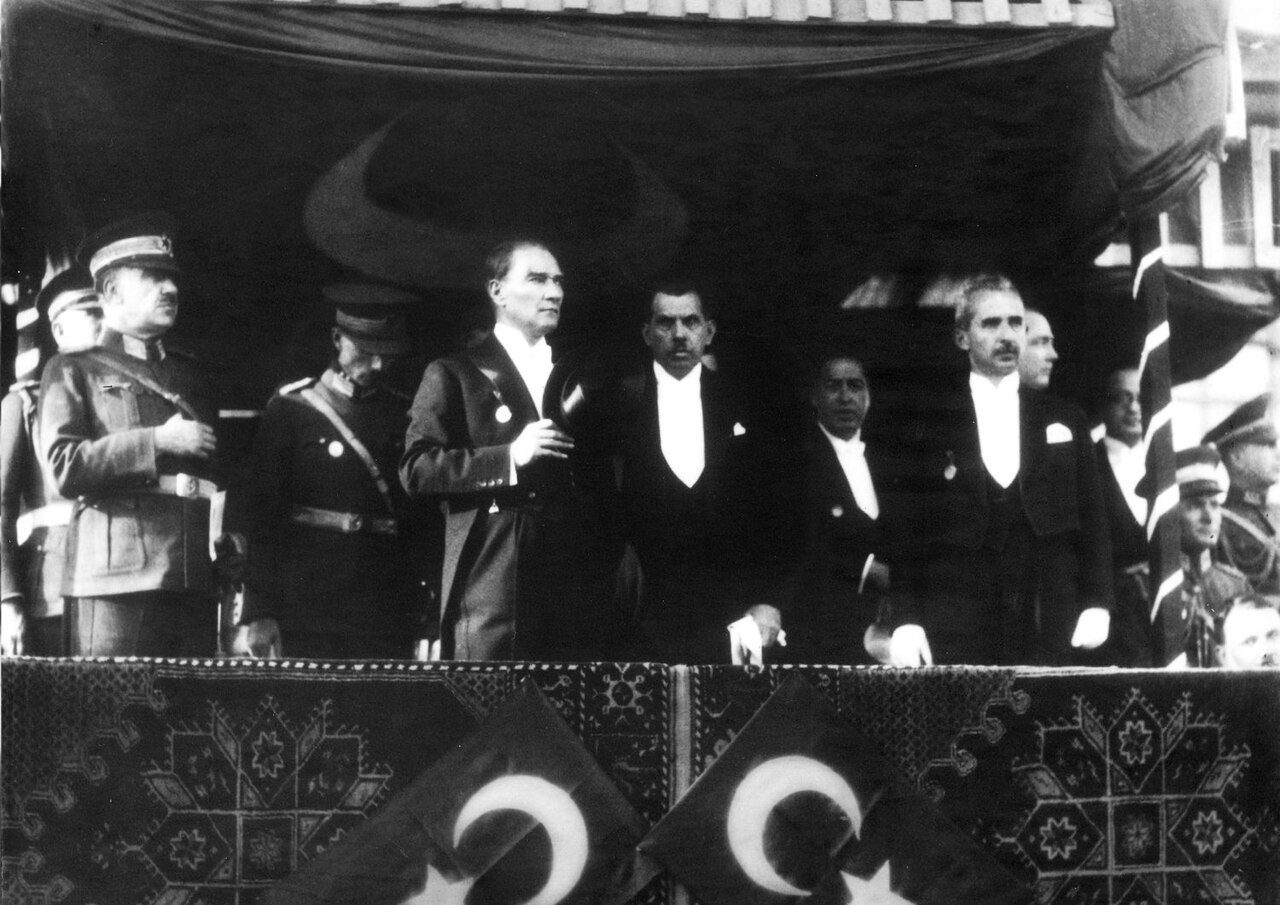
The speech was read at the ceremony for the tenth anniversary of the Republic, at the Ankara Hippodrome, before military units and a great crowd.
He had written the text himself in pencil, late one night in mid-October. Then he had it typed, and a few days before the celebration he read it to his closest colleagues and asked their opinion, making corrections and additions in ink. On 29 October he went up to the rostrum with these corrected pages in his hand.
The reading of the speech lasts about six minutes. It gives an account of a fifteen-year struggle, makes a promise for the next ten years, and ends with one of his sentences that is still repeated most often today.
“We shall raise our national culture above the level of contemporary civilisation.”
The Tenth Anniversary Speech · 29 October 1933The text
The parts marked with a line in the margin can be heard in the recording above. The seven-minute recording covers the whole of the speech, from the address “Turkish nation!” to the sentence “How happy is the one who says, I am a Turk!”; that is why the whole text is marked. The text is the published version cited in the sources below; in the reading at the rostrum, a word here and there may be heard to differ.
Turkish nation!
We are in the fifteenth year since we began the War of Liberation. Today is the greatest celebration, the day our Republic completes its tenth year. May it be blessed. At this moment, as one member of the great Turkish nation, I am filled with the deepest joy and excitement at having reached this blessed day.
My fellow citizens!
In a short time we have done many and great things. The greatest of these is the Republic of Turkey, whose foundation is Turkish heroism and high Turkish culture. For this success we are indebted to the resolute advance of the Turkish nation and its worthy army, in unity and together. But we can never regard what we have done as enough. For we are obliged, and determined, to do still more and still greater things.
We shall raise our country to the level of the most prosperous and most civilised countries of the world. We shall give our nation the widest welfare, means and resources. We shall raise our national culture above the level of contemporary civilisation. For this, the measure of time must, for us, be thought of not according to the slackening mentality of past centuries, but according to our century’s concept of speed and movement. Compared with the past, we shall work harder. In less time, we shall achieve greater things. I have no doubt that we shall succeed in this too.
For the character of the Turkish nation is high. The Turkish nation is hard-working, the Turkish nation is intelligent. For the Turkish nation has known how to overcome difficulties through national unity and togetherness. And for, on the road of progress and civilisation along which the Turkish nation is walking, the torch it holds in its hand and in its mind is positive science.
I must also point out with emphasis that one historical quality of the Turkish nation, a lofty human community, is to love the fine arts and to rise in them. That is why it is our national ideal to develop our nation’s high character, its tireless industry, its innate intelligence, its devotion to science, its love of the fine arts and its sense of national unity, nourishing them constantly and by every means and measure. This ideal, so befitting the Turkish nation, will enable it to succeed in doing the civilised duty that falls to it on the road to securing true peace for all humanity.
Great Turkish nation!
For fifteen years you have heard many words of mine promising success in the work we undertook. I am fortunate that in none of these words did I fall into an error that would shake my nation’s trust in me. Today I say with the same faith and certainty that the whole civilised world will, in a short time, recognise once again that the Turkish nation, advancing towards the national ideal in complete unity, is a great nation. I have no doubt at all that the forgotten civilised quality and great civilising capacity of the Turkish people will, through their development from now on, rise like a new sun on the high horizon of civilisation of the future.
Turkish nation!
With every ten years that flow away into eternity, I wish with all my heart that you will celebrate this great national festival with greater honours, with happiness, in peace and prosperity.
How happy is the one who says, “I am a Turk!” (Ne mutlu Türküm diyene!)
Muvaffakiyet: success. Azimkârane: with determination. Kâfi: enough. Mamur: prosperous, well developed. Muasır: contemporary. Mefhum: concept. Nispetle: compared with. Müspet ilim: science based on experiment and evidence. Tebarüz ettirmek: to point out, to emphasise. Fıtri: innate. Mütemadiyen: constantly. İnkişaf: development. Beşeriyet: humanity. Âti: the future.
A few words to the Americans
Three years before the Tenth Anniversary Speech, the cameras of the American company Fox Movietone were in Ankara.
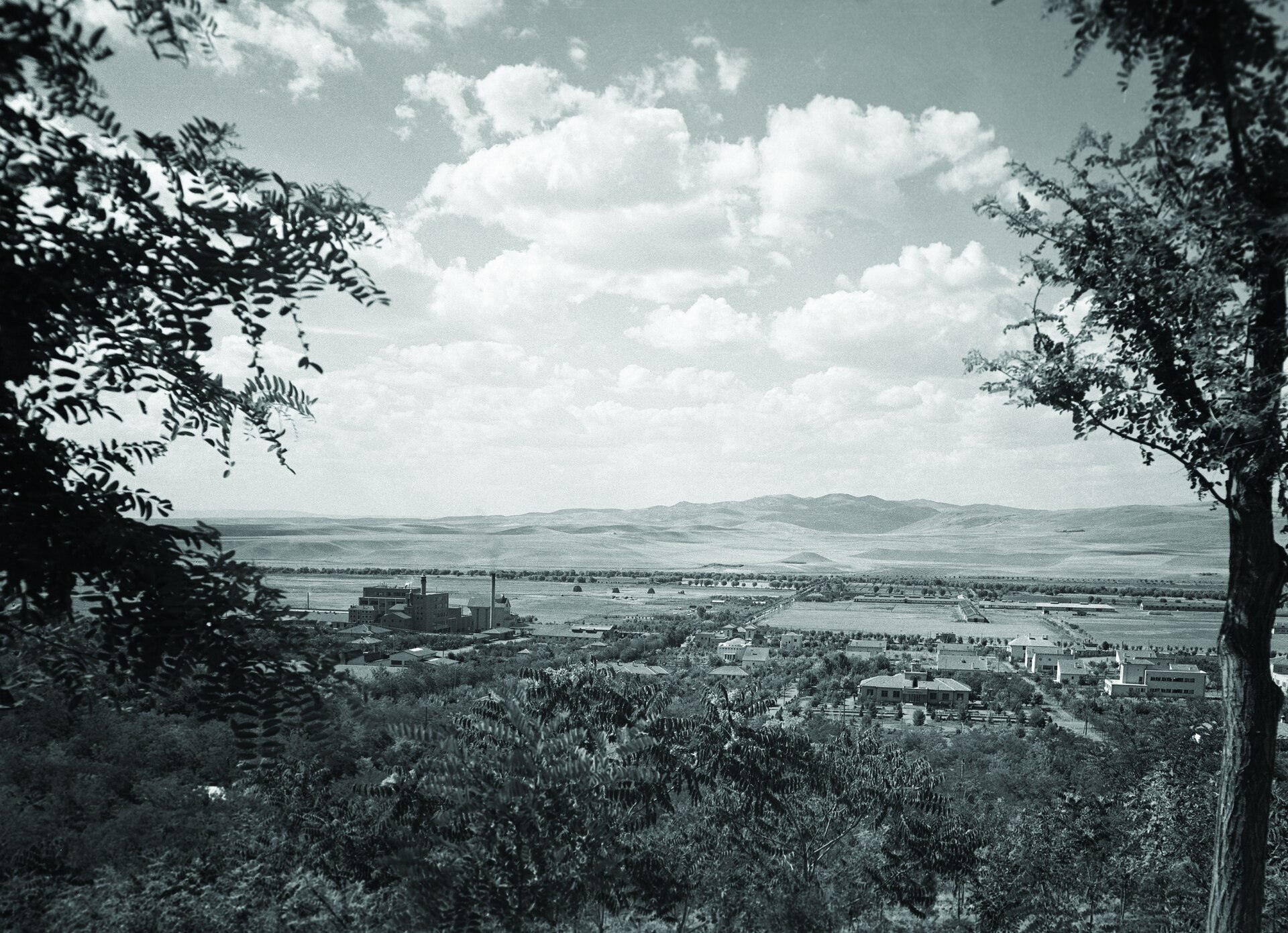
On 11 November 1930 Atatürk received the US Ambassador Joseph C. Grew at the Forest Farm he had founded. They toured the farm together; then he stood before the camera and gave a short speech addressed to the Americans. The film was shown on 3 December of the same year in Istanbul, at the Elhamra Cinema.
This is one of the oldest recordings of his voice to have come down to us. He speaks not from a ceremonial rostrum, but in the open air, on a farm, in a calm voice.
The whole film can be watched in the Film Mirasım (My Film Heritage) archive of the Ministry of Culture and Tourism and on Wikimedia Commons.
Why so little?
Atatürk gave hundreds of speeches; yet the moments when his voice was recorded hardly exceed the fingers of one hand.
Sound film became widespread in Turkey only in the 1930s. His speeches in the Assembly, the six days of the Nutuk, the countless words on his journeys through Anatolia were put down on paper, but not on tape. Most of the recordings in which we can hear his voice today come from newsreels shot by foreign and Turkish film companies.
The two recordings on this page are those whose source and legal status are documented on Wikimedia Commons. Other films showing him are also kept in the Film Mirasım archive of the Ministry of Culture and Tourism.