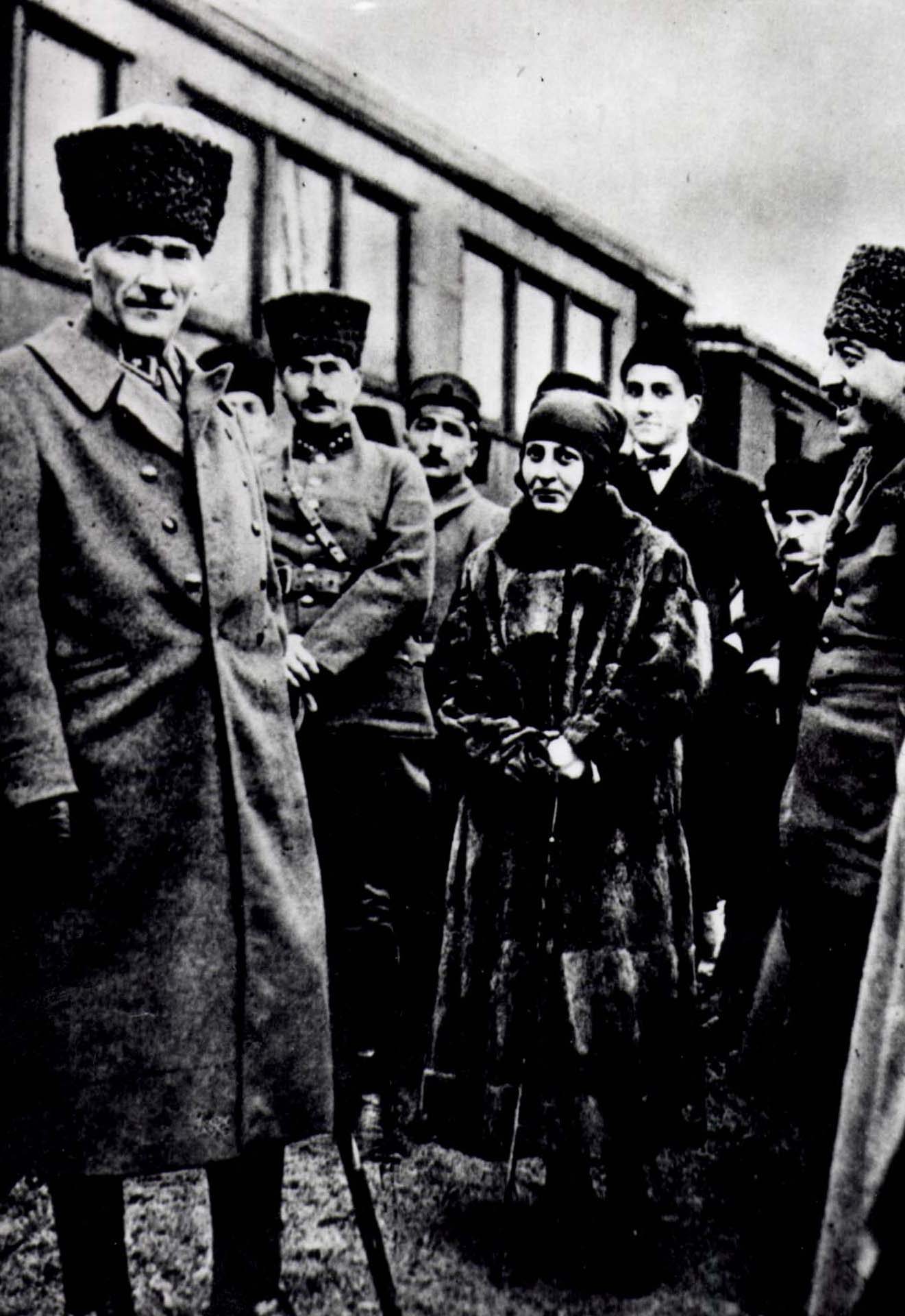
These memoirs were written through the eyes of those who knew him closely; that is why they are both precious and personal. Some told their story with admiration, some with resentment, some carrying both at once.
Here, only words verified from their source appear in quotation marks. The rest are short, faithful summaries of what they recount in their books; each time, we have marked this with “recounts”.
Salih Bozok
1881–1941 · Born in the same year, in the same city; he grew up in the same neighbourhood and was a distant relative. He studied at the military middle school and high school, and later served for many years as his chief aide-de-camp.
In his memoirs he recounts, through the eyes of a close friend, a life that began with the two boys’ shared past in Thessaloniki and stretched from Tripolitania to the National Struggle, and from there to Çankaya. He was at his side at almost every turning point of his life; in the last days, too, he was at Dolmabahçe.
Ali Fuat Cebesoy
1882–1968 · His classmate at the War College and the Staff Academy, commander of the Western Front in the National Struggle, later ambassador and Speaker of the Assembly.
In the book he devoted to their school years, he recounts how the War College cadet Mustafa Kemal read Namık Kemal and how he was moved by his ideas of homeland and freedom. He also writes that his own father, İsmail Fazıl Pasha, loved this friend of his son as if he were his own child.
Otto Liman von Sanders
1855–1929 · German general, commander of the Ottoman Fifth Army defending Gallipoli (Çanakkale). On the evening of 8 August 1915 he gave Colonel Mustafa Kemal command of all the units at Anafartalar.
“Mustafa Kemal, who had won his first military successes in Cyrenaica [in Tripolitania], was a commander who delighted in responsibility. On the morning of 25 April he had attacked on his own initiative with the 19th Division and thrown the advancing enemy back to the coast.”
Towards the end of the war, when they met again on the Syrian front, he speaks of him as “this excellent general whom I knew from the Gallipoli campaign”.
Ruşen Eşref Ünaydın
1892–1959 · Writer and journalist; later a member of parliament and ambassador. The author of the interview that first introduced Mustafa Kemal to Turkish readers.
On 24–28 March 1918, at his house in Akaretler, Beşiktaş, he talked for days with the Commander of Anafartalar. In this interview Mustafa Kemal recounts that on the morning of 25 April 1915 at Conkbayırı he ordered his soldiers not to attack, but to die: he had thought that in the time that would pass until they died, other forces and commanders could arrive to take their place.
Kâzım Karabekir
1882–1948 · Commander of the XV Army Corps; the commander who won the victory of the Eastern Front. In later years his path parted from Mustafa Kemal’s.
In his memoirs he recounts that, after Mustafa Kemal resigned from his post and from the army, he did not comply with Istanbul’s demand that he arrest him and take over command, and that he stayed at his side with his army corps. The same book also sets out in detail, from his own point of view, the disagreements that arose in later years.
Halide Edib Adıvar
1884–1964 · Novelist. In 1920 she fled Istanbul for Ankara; she worked on the founding of the Anadolu Agency, and at Sakarya and in the Great Offensive served in the army, first with the rank of corporal, then of sergeant major.
In her memoirs of the National Struggle she recounts that, in those first months in Ankara, Mustafa Kemal was always a measured, orderly and self-possessed man; she does not hide her admiration for the will that carried a whole movement on its own shoulders. The same book also bears the traces of the deep political rift that came between them in later years; the English edition is written in a more critical voice than the Turkish one.
Falih Rıfkı Atay
1894–1971 · Journalist and writer. In the First World War he was with Cemal Pasha on the Syrian front; in the years of the Republic he headed the newspapers Hâkimiyet-i Milliye and Ulus, and was for many years a member of parliament.
In his book, published twenty-three years after Atatürk’s death, he recounts his life from Thessaloniki to Dolmabahçe. The book’s most vivid pages are the evenings when the new letters, the new history and the new language were debated at the table through long nights. Atay writes of him not as a monument, but as a human being who thinks, questions, grows angry and grows tired.
Afet İnan
1908–1985 · His adopted daughter; a teacher, later a professor of history. Among the founders of the Turkish Historical Society.
In her memoirs she recounts meeting him in 1925 in İzmir, when she was a young teacher, and then the lessons and conversations in Ankara. With documents, she relates how the notes Atatürk wrote with his own hand for civics lessons came into being, and how these notes later became the book Vatandaş İçin Medeni Bilgiler (Civics for the Citizen).
Sabiha Gökçen
1913–2001 · His adopted daughter; Turkey’s first woman military pilot.
She recounts that, after the Surname Law, Atatürk would find a surname each evening at the table for a friend or someone close to him. When her turn came, he wrote “Gökçen” on a piece of paper. At that time she had not yet begun to fly; she took up flying about a year later.
“Why, with what thought, Atatürk had given me this surname, I do not know.”
Kılıç Ali
1888–1971 · One of the organisers of the defence of Antep, member of parliament; for many years he was in Atatürk’s closest circle.
In the memoirs he told to the journalist Hikmet Bil, he recounts, beginning with the first months of the National Struggle, the daily life around Atatürk, the table, the journeys and the days of his final illness, through the eyes of someone close to him.
Hasan Rıza Soyak
1890–1970 · Secretary-General of the Presidency; the man who was at his side every day in his last years.
In his memoirs he recounts the last months of the illness and the story of the will. On 6 September 1938, in a room where he and the doctor Neşet Ömer İrdelp were present, Atatürk handed the sealed envelope containing his will to the notary İsmail Kunter. The record bore the signatures of all four.
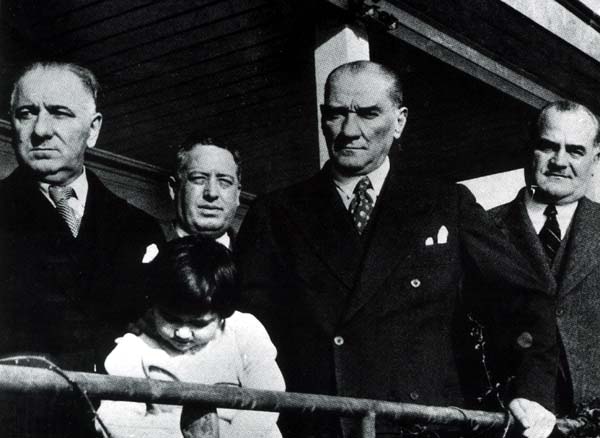
Many of the “words of praise” for Atatürk circulating on the internet are sentences attributed to foreign statesmen that appear in no document. No testimony whose source could not be shown has been included on this page.